

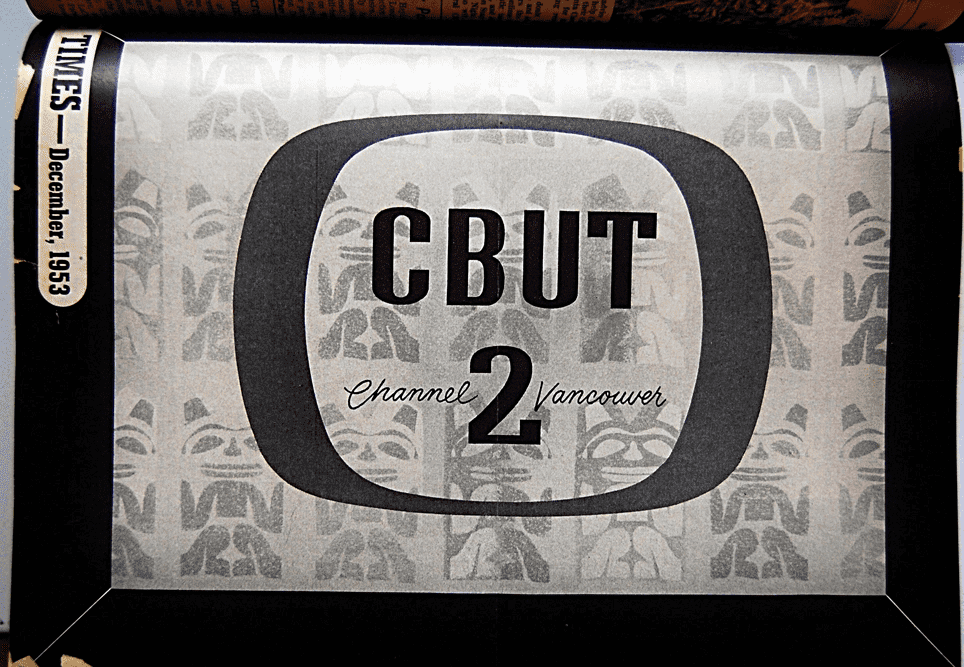
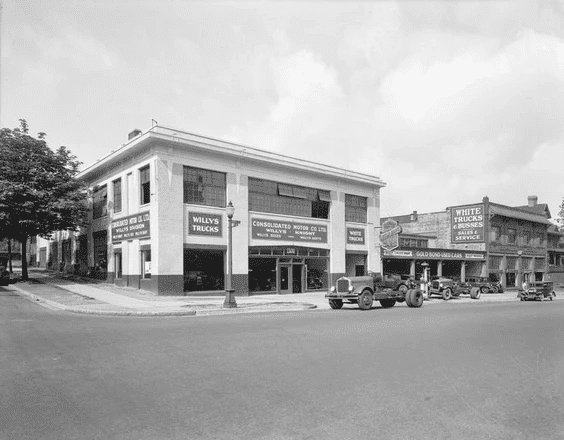
In 1953, CBC launched its first television station in Western Canada. Channel 2, CBUT, began broadcasting at 6:00 PM from a repurposed car dealership on West Georgia Street, just a few blocks away from CBC’s radio studios at the Hotel Vancouver. The station transmitted its broadcasts via an 80-meter transmitter installed on Mount Seymour. In 1975, CBC consolidated its local radio and television operations under one roof and renamed the television station “CBC British Columbia.” The establishment of this station was seen as a significant contribution to Canadian sovereignty and cultural identity. Learn more about this fascinating history on vancouver-future.
The First Broadcast
On December 16, 1953, CBUT aired Western Canada’s first television broadcast. This groundbreaking transmission laid the foundation for the establishment of over a thousand public and private broadcasting sites across the country. Initially, CBC had a limited reach with stations only in Toronto, Montreal, and Vancouver. By 1954, it had expanded to include Ottawa, Winnipeg, and Halifax, with Montreal launching its French-language station the same year. Fifteen private stations also began operating, broadcasting at least 10–12 hours of CBC programming weekly.
The Rise of Television’s Popularity
Television rapidly gained popularity in Vancouver and across Canada. By 1954, Vancouver residents had purchased one million television sets. Television, initially perceived as “radio with pictures,” quickly transformed social habits and lifestyles. Living room furniture was rearranged to face the TV, TV dinners became a staple, and family activities shifted to accommodate television viewing.
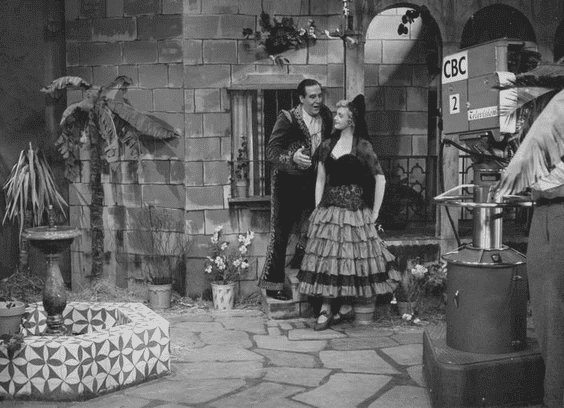
Television also sparked a mini-boom in cultural and educational programming in Vancouver. Early Canadian content, distinct from American programming, included Shakespearean dramas, discussions on Canadian literature, scientific series, and public debates. While these programs were appreciated by some, the majority of viewers preferred American shows. However, Vancouver excelled in producing notable Canadian content, including news programs, documentaries, and iconic shows like Hockey Night in Canada, Don Messer’s Jubilee, and dramas like Les Plouffe.
CBC as a National Network
By 1958, CBC had established microwave transmission links from coast to coast, becoming a truly national network. Video machines allowed for synchronized programming across time zones, strengthening national unity.
From the 1950s onwards, television in Vancouver experienced exponential growth. This was further supported by the creation of Telefilm Canada in 1967 and the Canadian Radio-television and Telecommunications Commission (CRTC) in 1968. These institutions provided funding and regulation, enabling the production of iconic Canadian films and series like Anne of Green Gables. Today, 78% of Canadian households subscribe to cable television, a rate surpassed only by Belgium.
The Early CBUT Studio and Programming
CBUT’s initial broadcasts were produced in a converted car dealership on West Georgia Street. The debut evening included a variety of Canadian programming, such as news features, National Film Board shorts, and Toronto’s puppet show Uncle Chichimus. The broadcasts were initially live, as recorded programming was not yet widely feasible.
In 1975, CBC Vancouver’s radio and television operations were moved to a unified facility at 700 Hamilton Street. CBUT’s logo during the mid-1970s featured a stylized totem pole representing the letter “T.”
Local Programming and National Integration
Over the years, CBUT shifted its focus from local to national programming due to budget constraints and operational centralization. Local shows were reduced, with some sporadic efforts to revive local content, such as Vancouver Life, which was eventually discontinued. Despite these changes, CBUT’s legacy as CBC’s pioneering television station in Western Canada remains significant, representing a milestone in the evolution of Canadian broadcasting and cultural development.
The First Broadcast of CBUT Channel
Western Canada’s first television station, CBUT (Channel 2) in Vancouver, aired its inaugural broadcast on a Wednesday evening with a lineup of Canadian shows. This milestone was a blend of innovation and tradition. As journalist Jack Wasserman described in The Vancouver Sun, “It was CBC radio—with pictures.” The broadcast originated from a converted car dealership located at 1200 West Georgia, which had been transformed into CBC’s television studio.
The first program began with images of the Queen, signaling the launch of a new era in Canadian broadcasting. However, sound transmission proved to be a challenge, as technical staff quickly noted an audible buzz during the transmission. Despite these early hurdles, the evening was celebrated as a significant achievement in Canadian television history. Over 500 distinguished guests attended the opening gala.
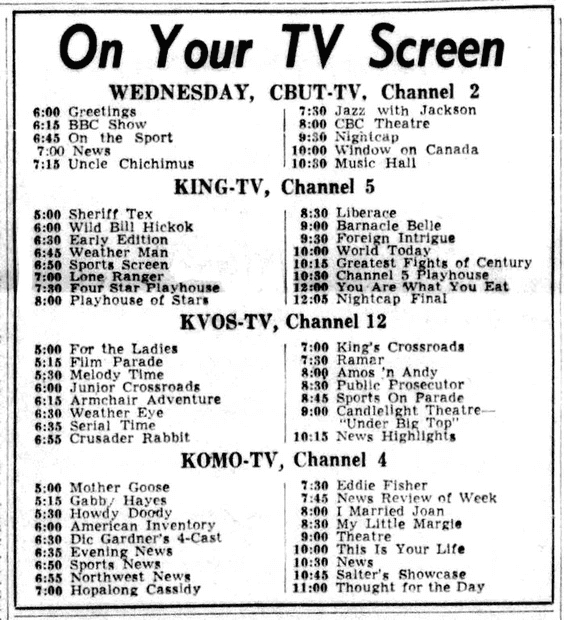
The programming that followed included congratulatory messages, a recorded segment featuring “People of the Show in Vancouver,” and a series of performances. These included a comedic and thought-provoking play titled Man of Action, several short films produced by the National Film Board, and Toronto’s puppet show, Uncle Chichimus. At that time, broadcasts relied on film-like materials as video recording technology had not yet been introduced. Live broadcasting was the only feasible way to deliver content.
CBUT’s Logo and Programming
In 1975, CBC consolidated its radio and television operations in Vancouver into one building. Previously, radio stations like CBU (690 AM), CBU-FM (105.7), and CBUF-FM (97.7) operated separately in a studio located at 701 Hornby Street, housed in the basement of the Vancouver Hotel. These stations, along with CBUT, became part of the Regional Broadcast Centre on 700 Hamilton Street, centralizing CBC’s presence in Vancouver.
CBUT’s logo between 1976 and 1980 featured the letter “T” stylized as a totem pole, reflecting the local cultural heritage of British Columbia.
Changes in Local and National Programming
In recent years, CBUT, like other CBC-owned stations, has reduced its focus on local programming in favor of nationally syndicated shows originating from Toronto. By 2002, the station aired only sporadic local content unrelated to news and ceased using local station identifiers, opting instead for network-wide branding. Budget cuts led to the integration of CBUT’s master control operations into the Canadian Broadcasting Centre in Toronto, aligning the channel’s operations with national standards.
Despite these changes, CBUT has occasionally attempted to revive its local presence, launching shows like Vancouver Life. However, such initiatives were short-lived, and the station continues to prioritize national content while maintaining its historical significance as a pioneer in Canadian broadcasting.