

Electric lighting was one of the greatest technological achievements of the 19th century, transforming not only daily life but also the infrastructure of cities worldwide. Canada, with its vast territory and diverse economic challenges, was not exempt from this revolution. From the first experimental installations to the widespread use of electric lamps in major cities, the process of electrification in Canada has its own unique history. Vancouver holds a special place in this process, as electric light became a crucial driver of urban infrastructure development here. Read more on vancouver-future.
The Dawn of Canadian Electrification
Canada, being one of the largest countries in the world with immense natural resources, began utilizing electrical energy to improve the living conditions of its citizens by the late 19th century. The first electric lighting was introduced in 1879 in Ottawa, where the Ottawa Electric Light Company installed the first electric streetlights. This marked the beginning of a process that gradually encompassed all major cities across the country.
Montreal was one of the first Canadian cities to benefit from electric lighting. As early as 1882, The Montreal Light, Heat and Power Company began supplying electrical energy to light the city streets—a major accomplishment for that era. Parallel to electric lighting, Montreal also saw the operation of its first electric streetcars, providing convenient urban transit. Moreover, Canada was one of the first countries to recognize the potential of electricity for industrial and domestic development. Alongside electric lighting, other uses of electrical energy rapidly expanded, particularly in industrial manufacturing and transportation. These technological shifts contributed to the modernization of cities and the improvement of life for Canadians.
The Arrival of Electric Light in Vancouver
While the electrification of Canada as a whole proceeded gradually, Vancouver witnessed one of the most rapid phases of technological transformation. The city, which only became the capital of British Columbia in the mid-1880s, quickly became one of the most innovative in the country regarding electrical technologies.
Vancouver’s electrification process began in the very early part of 1887. That’s when the first electric streetlights appeared on the city’s streets. This was made possible by technological advancements and significant infrastructure investments. One of the primary factors contributing to the introduction of electric lighting was the enormous economic potential unlocked by the creation of the Canadian Pacific Railway (CPR), which enabled faster and cheaper transport of various goods and resources.
The first electric streetlights in Vancouver, installed on the central streets, became a symbol of a new era for local residents. Gas lamps, which were used previously, were not as efficient or convenient, and the presence of electric lights gave the city a new look. This also created safer living conditions for residents: the illumination was brighter, which contributed to the development of nightlife. Simultaneously with the development of street lighting, electric streetcars also began to appear in Vancouver. The first electric streetcar was launched in 1890, marking another step forward in the city’s transport infrastructure development.
Electrification Development in Other Canadian Cities
In the mid-to-late 19th century, other major Canadian cities actively began adopting electric lighting and electric transport. In the 1890s, Toronto, Edmonton, and Victoria also started operating electric streetlights, and subsequently streetcars. Electric lighting was introduced in Toronto in 1884, and by 1894, the city had its first electric railway system. This city had the most electric lines built in the country at the time. Technology advanced quickly, and by the 1910s, most Canadian cities were fully electrified, significantly improving living conditions for residents.
Parallel to electric streetlights and streetcars, other electrical technologies were developing in Canada. One important phase was the use of hydroelectric power plants for electricity generation, which allowed for a significant reduction in energy costs and provided access to electricity in remote areas of the country.
The Impact of Electrification on Vancouver’s Growth
Electrification in Canada changed not only the appearance of cities but also the country’s economic structure. The introduction of electric lights and streetcars allowed for more efficient use of time by urban residents, increased labour productivity, and opened up new opportunities for business development. In a broader sense, electric lighting and energy infrastructure became essential tools for the development of industry and agriculture. They also fostered the growth of new sectors, such as telecommunications and information technology, which later became central to Vancouver’s economy.
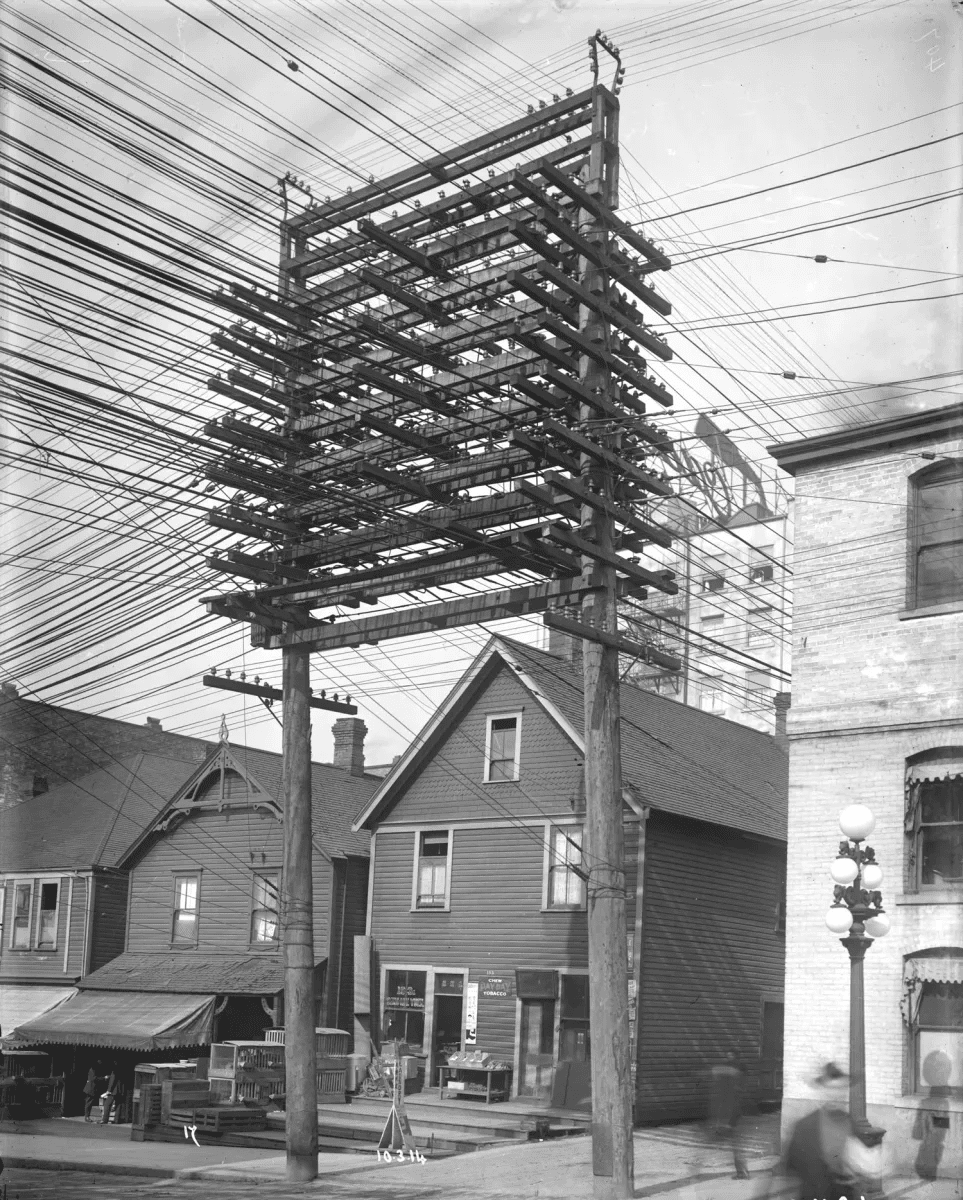
Thus, the appearance of electric lighting in the city symbolized the transition from the industrial age to the modern technological era. While Vancouver became one of the pioneering cities in this field, its successes served as an example for other Canadian municipalities, contributing to the overall development of the country and its industries.