

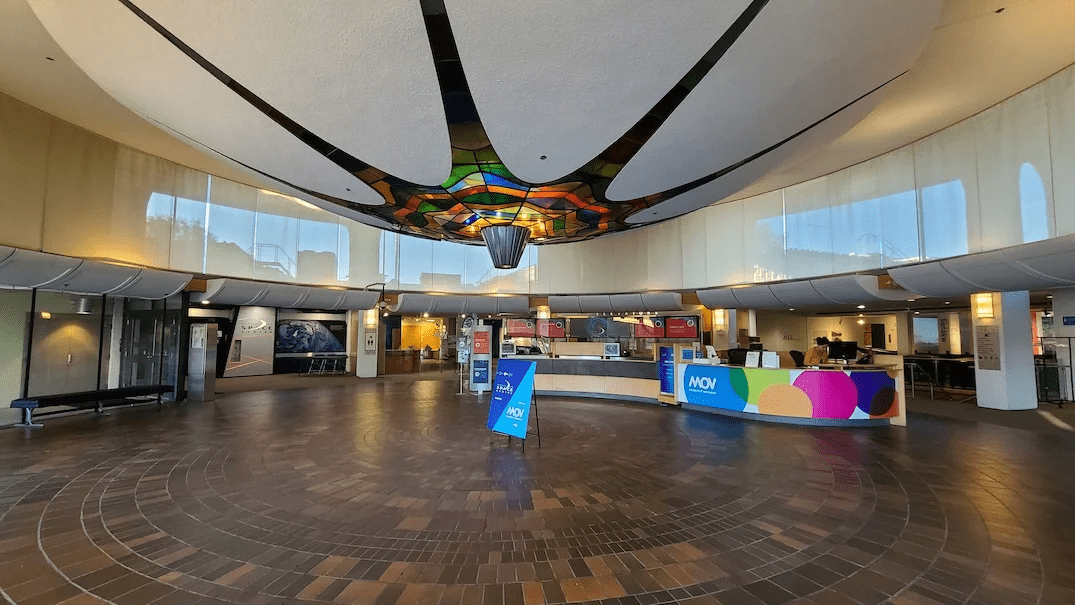
The Museum of Vancouver (MOV) is Canada’s largest civic museum and the oldest cultural institution in Vancouver, tracing its origins back to 1894. Initially known as the Vancouver Museum, and later the Centennial Museum, it received its current name in 2009. MOV specializes in creating exhibitions and programs focused specifically on Vancouver, prompting residents to reflect on the city’s past, present, and future. The museum occupies a vast space in a distinctive building located in Vanier Park, shared with the H.R. MacMillan Space Centre, but it boasts a significantly larger area and separate facilities for housing its collections. Read more on vancouver-future.
Where is the Building Located and Who Designed It?
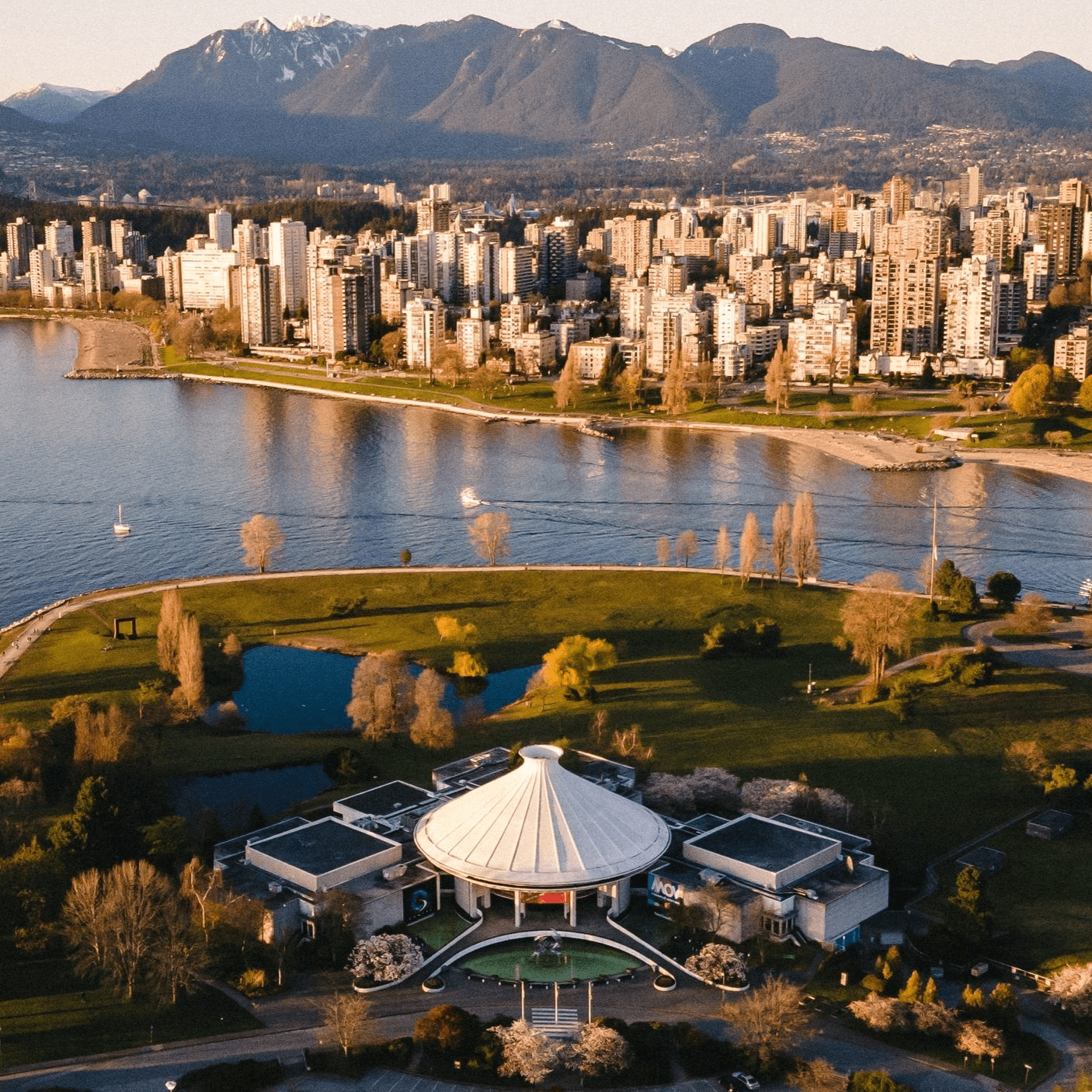
The Museum of Vancouver is situated at the south end of Vanier Park, in the Kitsilano neighbourhood, at 1100 Chestnut Street. It is part of a lush green space that connects the Vancouver Maritime Museum, the Bard on the Beach theatre, the Vancouver Archives, and the Vancouver Academy of Music.
The museum building itself was designed by architect Gerald Hamilton in 1967. Hamilton, who studied at the University of Leeds and moved to Vancouver in 1950, was a known proponent of the New Formalism architectural school, becoming one of its most notable representatives in Vancouver. Initially, the building was intended only to house the museum, but a generous contribution from lumber executive H.R. MacMillan allowed a planetarium to be added to the project. The distinctive roof, intended to symbolize a traditional basket made by the Indigenous Peoples of the Northwest Coast, also resembles the shape of a flying saucer. This led to some confusion among visitors who mistakenly believed the building was solely for the planetarium, even though the majority of the space is occupied by the Museum of Vancouver. The planetarium was named the H.R. MacMillan Space Centre in the late 1990s. The official opening took place on May 20, 1967, attended by Princess Alexandra, granddaughter of Queen Mary and King George V, and a cousin of Queen Elizabeth II.
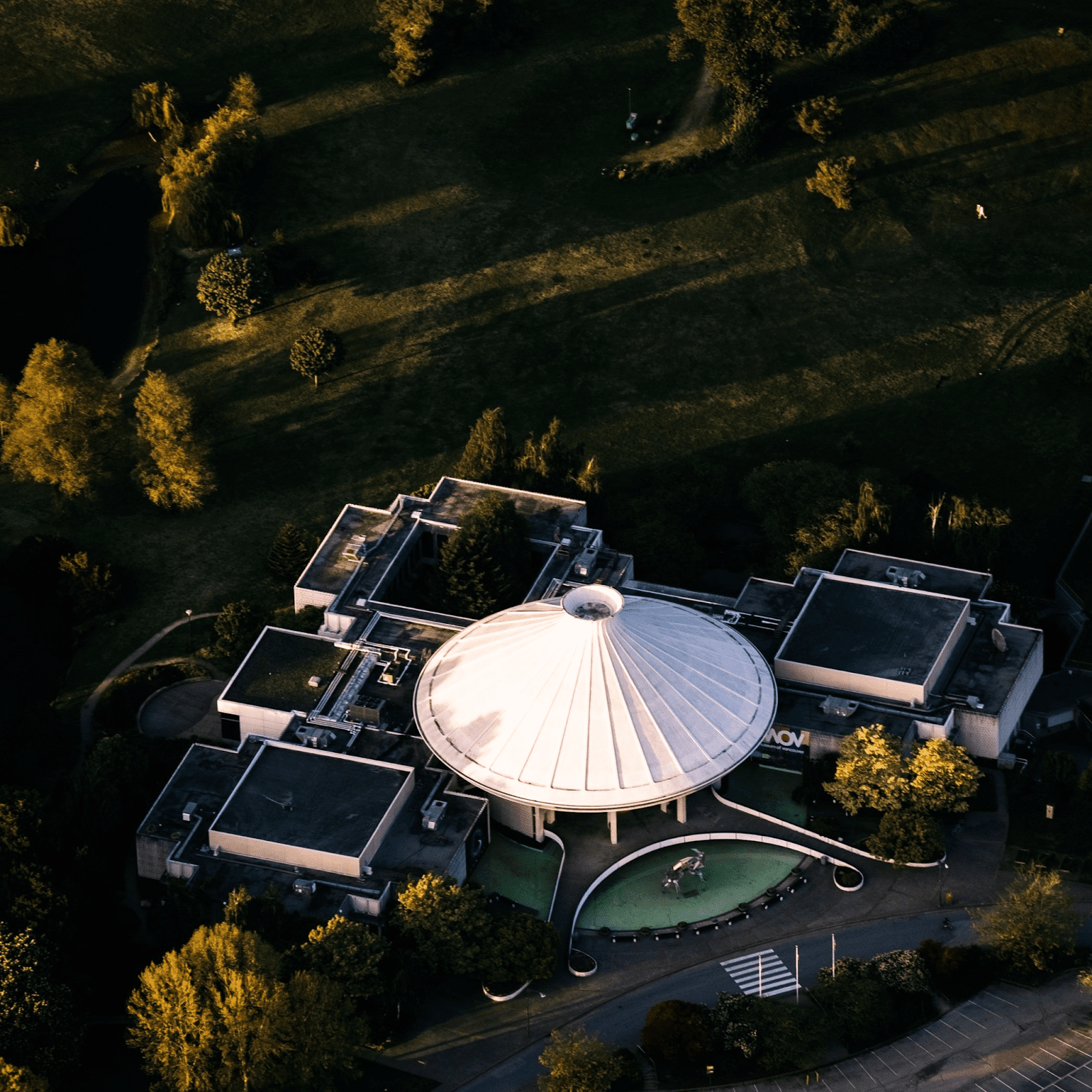
The cultural institution bears a resemblance to a project by John Nugent’s studio, created by architect Clifford Wiens. This is why Vancouverites consider it a landmark. Furthermore, the building is one of the most recognizable in the city. It was initially jokingly nicknamed the “Taj Mahal on the Creek” due to its unique conical shape and reflective pools traversed by curved pedestrian bridges.
History of the Museum
The Museum of Vancouver was founded by the Art, Historical and Scientific Association of Vancouver (AHSA), which emerged on April 17, 1894, with the goal of fostering a taste for beauty and refinement in life. Immediately after its first meeting, the AHSA presented its first temporary exhibition—”Pictures and Curiosities”—in rented space on the top floor of the Dunn Block building on Granville Street in Vancouver. This exhibition catalyzed numerous donations that laid the foundation for the museum’s collection, primarily natural history specimens and ethnography. The first documented donation was a stuffed trumpeter swan, gifted by Mr. Sidney Williams in 1895. Starting in 1898, the AHSA regularly purchased artifacts, building a diverse collection that reflected the leadership’s interests rather than a strategic approach to collecting exhibits.
The official opening of the museum took place on April 19, 1905, on the top floor of the Carnegie Library. Due to the rapid growth of the collection, a permanent space became necessary. Following negotiations with the Vancouver City Council, an agreement was reached on August 26, 1903: the museum collection was transferred to the city’s ownership in exchange for providing a suitable venue for the institution. Thus, the museum was allocated space on the top floor of the newly constructed Carnegie Library.
Between 1915 and 1925, the AHSA and the museum aimed to create a reconstructed Indigenous village in Stanley Park, which would be situated around a large collection of totem and house poles acquired by the association. Although this project never came to fruition, it laid the groundwork for the modern totem pole display in Stanley Park—one of Vancouver’s most famous and most photographed tourist attractions.
In 1930, the museum initiated large-scale archaeological excavations at the Marpole Midden—one of the most important archaeological sites on the Northwest Coast. This location is also an undisputed part of the ancestral territory of the Musqueam Nation, where the Musqueam Marpole Village was located. The results of these studies formed the basis for the well-known “City Before the City” exhibition, created in collaboration between the Museum of Vancouver, the Museum of Anthropology, and the Musqueam First Nation.
Collection and Holdings
The Museum of Vancouver’s collection is a unique and multifaceted assembly that reflects the interests of both generous donors and the curators who shaped it over decades. Similar to many museums built on private donations and enthusiasm, this collection was not always formed according to a clear strategy, yet it has gained national significance. Due to limited exhibition space, a significant portion of the artifacts is still stored in the vaults.
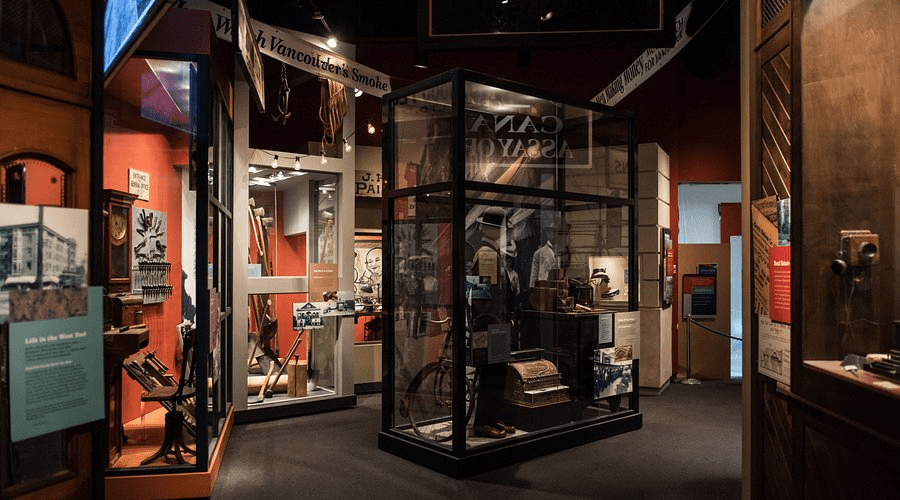
One of the most valuable parts of the collection includes Indigenous artifacts and Eastern relics gathered by Mary Lipsett—a renowned collector and co-founder of the Lipsett Indian Museum, which opened in 1941 on the site of the former PNE Aquarium. In 1948, the Vancouver Sun newspaper called this collection the best in Canada. Mary Lipsett also earned deep respect for her respectful and trusting communication with representatives of the First Nations, for which she received the honorary name Kwawlewith, meaning “mother regent, to whom one comes for wise counsel.” By donating her entire collection to the then-Vancouver Museum, she made an invaluable contribution to the preservation of cultural heritage. As a result, these unique exhibits are preserved in the museum’s holdings today.
Educational Programs and Activities
MOV conducts extensive educational activities, organizing lectures, seminars, and interactive workshops aimed at various age groups. Particular attention is paid to collaboration with schools and educational institutions, offering specialized programs for students. These activities help youth gain a deeper understanding of Vancouver’s history and culture, fostering a sense of pride in their city. In addition to permanent exhibitions, the museum regularly organizes temporary exhibitions dedicated to current topics and events. By collaborating with local artists, cultural organizations, and communities, MOV creates platforms for highlighting diverse aspects of city life. Such partnerships allow the museum to remain a dynamic space that reflects contemporary trends and challenges.
The museum also actively integrates modern technology into its operations, creating interactive exhibits that encourage visitors to participate actively. The use of multimedia elements, virtual, and augmented reality allows historical events and cultural phenomena to be presented in a new format, making a visit to the museum an engaging experience for all generations. Overall, the Museum of Vancouver plays a crucial role in strengthening the city’s cultural identity.