

Vancouver is known for its incredibly diverse architecture, writes vancouver-future. This makes it particularly interesting to track the city’s architectural evolution. And believe me, there’s plenty to observe and learn about. The diverse population of this Canadian city has contributed to the creation of buildings in various styles. This variety is truly a hallmark of Vancouver.
In this article, based on sources such as hisour.com, we explore the architectural features of Vancouver in the 19th and 20th centuries.
19th Century
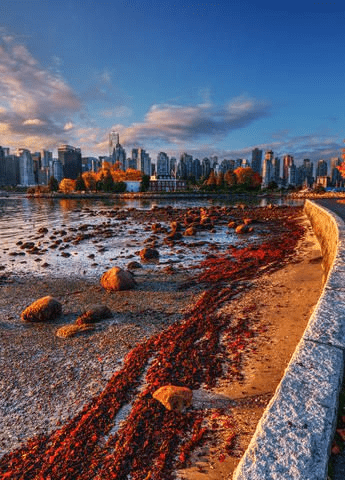
The First Nations lived near Vancouver for approximately three thousand years.
In 1791, several European ships visited this area. By the early 1800s, communities had already been established.
Their buildings were predominantly wooden. One such structure remains in Stanley Park, measuring 60 meters in length and 20 meters in width, capable of housing about 100 people at a time.
The first European settlement in the area was a Hudson’s Bay Company outpost, established in 1827.
This settlement showcased early examples of European encampments. By the 1850s, the region’s main center shifted to New Westminster, although much of that city was destroyed by a major fire in 1898.
A New City
The first European settlement on the site of present-day Vancouver emerged in the 1860s.
The settlement was named Granville.
It became the terminus for the Canadian Pacific Railway, and in 1886, it was incorporated as the City of Vancouver. However, a fire soon devastated nearly all of its buildings, sparing only the Hastings Mill store, which was later converted into a museum.
One notable example of 19th-century architecture is Christ Church Cathedral, opened in downtown Vancouver in 1894.
20th Century
Edwardian buildings near Vancouver’s old downtown became the tallest commercial structures of their time. These included the Vancouver Province Building, the Dominion Building, the Sun Tower, and the Marine Building, the latter adorned with exquisite ceramic tiles and gilded brass doors.
Other notable structures from this period include the Vancouver Art Gallery, the Hotel Europe, St. Paul’s Hospital, and Vancouver City Hall.
Glass Elements
The late 20th century saw the introduction of a significant number of glass elements in Vancouver. They appeared everywhere—from buildings to sidewalks.
The palette of the city’s open spaces includes classical Chinese gardens and landscaped terraces on Robson Square.
Preserving Granville
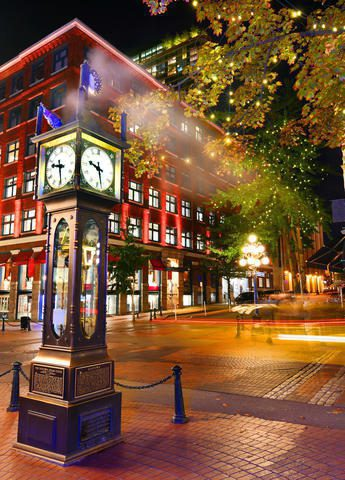
In the 1960s, a movement arose in Vancouver to preserve Granville’s unique and historic architecture, which was under threat of demolition.
In 1971, Granville was designated a historic site, ensuring its structures could not be destroyed.
This marked the beginning of street improvement projects. By the 1970s, Granville’s industrial buildings and area were transformed into a vibrant mixed-use zone. Industrial facilities were repurposed, while new structures were built to accommodate public markets, artisan studios, retail shops, restaurants, and hotels.
During the 1980s, some Edwardian buildings were connected via a covered atrium to create a shopping complex.
Lack of Squares
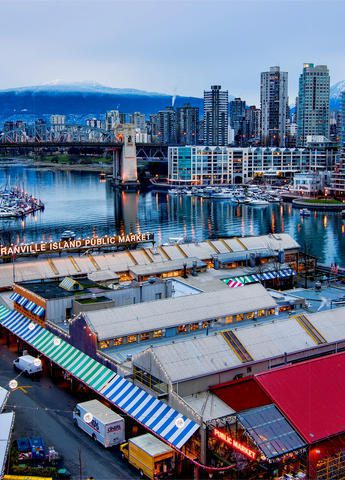
Unlike other cities, Vancouver lacks large squares in its central districts.
The city’s main public spaces are located on its periphery, such as landscaped parks and waterfronts.
A Unique Feature
A defining characteristic of Vancouver is its slender “point towers”, which rise slightly above low-rise podiums—a feature unique to the city.
These design elements ensure that residential buildings benefit from natural light and other amenities.
The continuous podiums make streets feel more dynamic, while the slender towers allow natural light to flood the streets.
The Impact of Cars
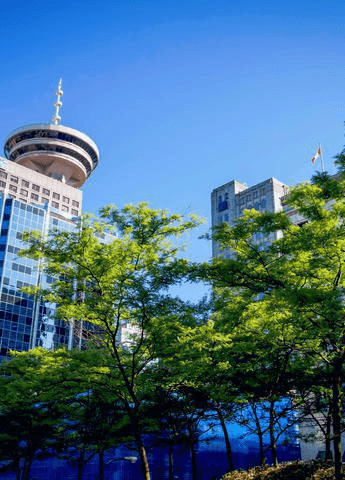
Vancouver’s architectural development coincided with the rise of private automobiles.
Traffic congestion became increasingly common, and carbon monoxide emissions posed a growing problem. Consequently, local authorities began actively promoting cycling.
A Famous Residential Area
One cannot discuss Vancouver’s architecture without mentioning its residential neighborhoods.
One of the most famous is the West End, covering one square mile. It is considered one of the most densely populated neighborhoods in Vancouver. To address this, city authorities developed zoning to encourage commercial, retail, and residential development in the downtown area.
Residential Architectural Styles
Vancouver’s residential architecture began with the West Coast Style, characterized by the neighborhoods of West Point Grey, the North Shore, and Burnaby Capitol Hill.
Another prevalent style in Vancouver is the Vancouver Special, known for its simplicity and lack of designer or architect involvement. Wood remains the primary construction material for most houses in Vancouver.
Conclusion
As we can see, despite its modern outlook and adoption of new trends, Vancouver has preserved much of its historical architecture. This demonstrates the population’s appreciation for history and trust in the expertise of previous generations. During earlier times, many were true professionals in their craft.
Moreover, movements advocating for natural lighting and opposing automobile congestion align with contemporary concerns. While much time has passed, the core issues remain the same, though more people are now actively addressing them and raising awareness. These efforts include various environmental groups and eco-activists.
Returning to Vancouver’s architecture, it is clear that the city’s commitment to preserving its architectural heritage allows it to maintain a sense of harmony and proportion. This approach serves as a valuable example for other cities, encouraging them to preserve their historical buildings.
Historical structures provide unique benefits to urban spaces, such as balanced proportions, appropriate humidity levels, and optimal lighting. Furthermore, these buildings were constructed during a time when architects applied maximum effort and skill to ensure enduring quality, making them worthy of future generations’ admiration.