

It is hard to imagine a modern city without a cemetery, writes vancouver-future. As somber as such a place might seem, its necessity is indisputable. A cemetery symbolizes the conclusion of a person’s earthly journey.
Cities with long histories are inherently tied to their cemeteries. At least one cemetery is a fixture in any historic settlement—and modern ones as well.
Notably, old cemeteries often become open-air museums. Their existence is typically linked to the history of the city where they are located. Visiting one of these ancient burial grounds offers an opportunity to delve into the past and learn more about former residents of a particular area.
Vancouver is a city with an incredibly rich history. The lives of its past inhabitants are as diverse as they are fascinating. It seems that Vancouver was destined to become what it is today, attracting a wide range of talented individuals. While many notable figures were native Vancouverites, the city’s development also owes much to people from other parts of Canada and the world who chose to settle here. Together, they shaped Vancouver’s remarkable history. But nature takes its course, and even the brightest lives must come to an end.
Thus, Vancouver’s authorities faced the need to establish a cemetery.
In this article, based on cmp-cpm.forces.gc.ca and vancouversun.com, we discuss Vancouver’s oldest and only cemetery.
The First Burial
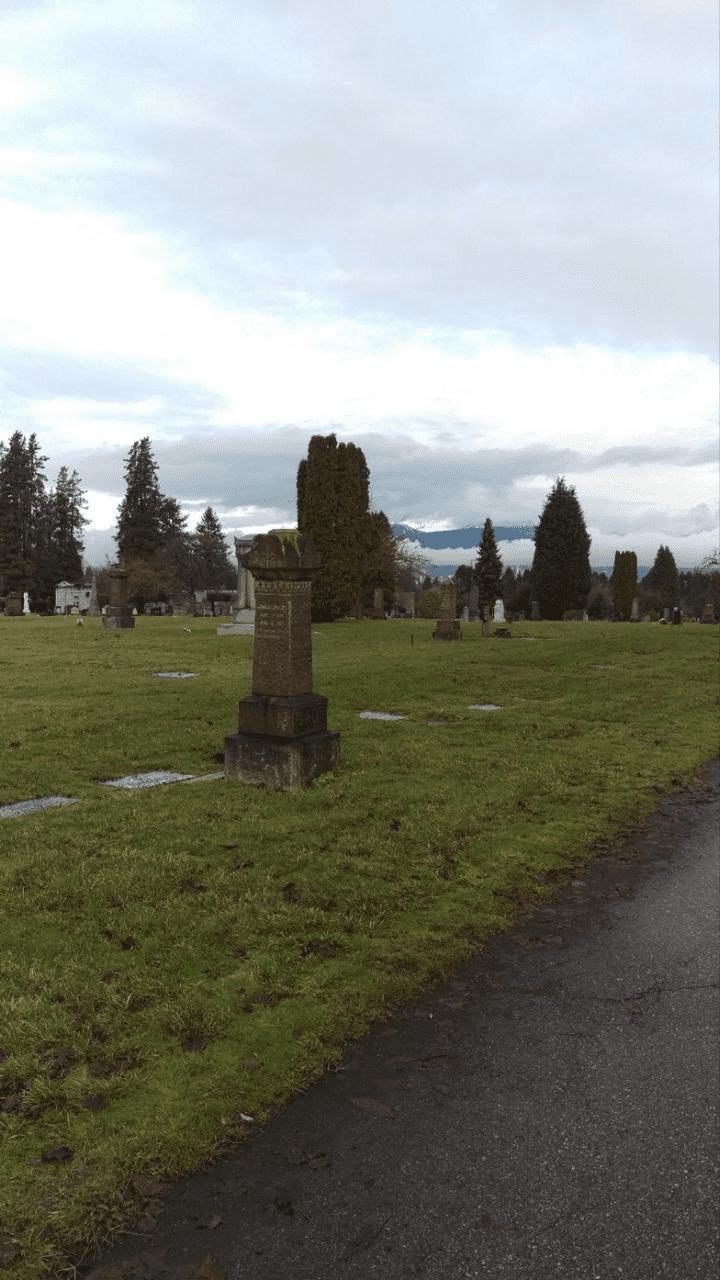
Mountain View Cemetery, Vancouver’s only cemetery, was established in 1886. It is located slightly west of Fraser Street, between 31st and 43rd Avenues.
The cemetery spans over 100 acres and houses approximately 92 burial sections. The number of interred individuals exceeds 145,000.
The first burial took place on February 26, 1887. Initially scheduled for January of the same year, it was delayed due to poor weather, a newly constructed road, and a broken wagon wheel. The intended first resident of the cemetery was temporarily buried outside the grounds until their remains could be moved to Mountain View.
The Grounds
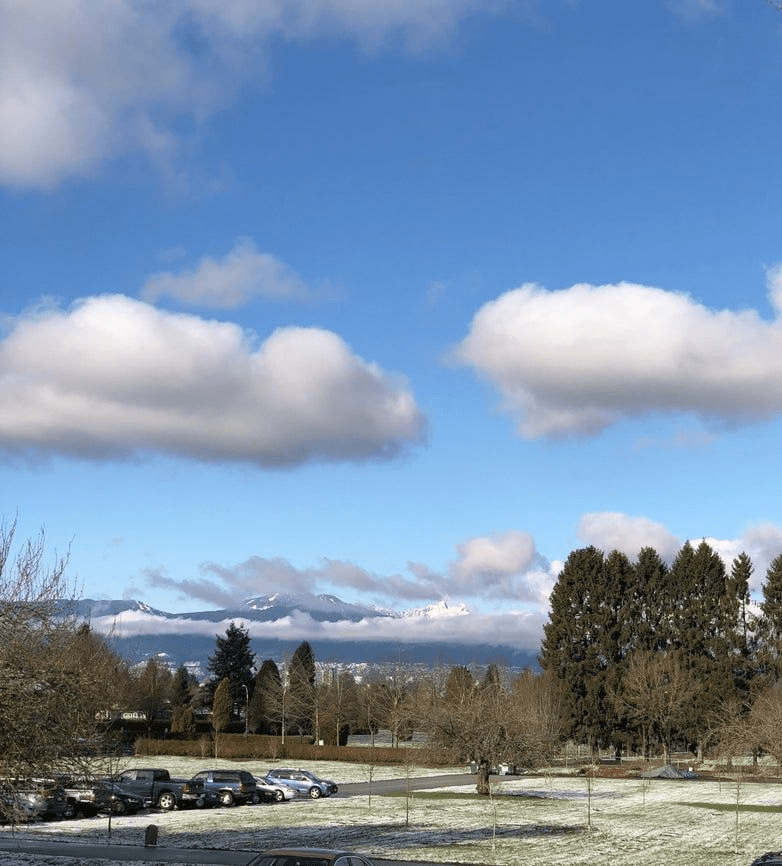
Only one other cemetery in the area predates Mountain View, located in New Westminster.
When Mountain View opened in 1886, it replaced an earlier burial ground in Stanley Park.
The original plot of land, referred to as “Old Acacia,” is bordered by Fraser Street, 33rd and 37th Avenues, and features three remaining cypress trees from the original planting. In 1901, the northern part of the cemetery was purchased for expansion and named the “Horne Addition” after the developer who sold the land. In 1910, Jones Farm, located between 37th and 41st Avenues, was added to further expand the cemetery.
In 1922, additional land was acquired west of the Horne Addition. Another expansion, known as the “1919 Addition,” is a section bounded by 41st and 43rd Avenues and includes burials of victims of the Spanish flu pandemic.
The final expansion, known as the “Abray Park Addition,” is located on the cemetery’s western side. Purchased in 1941 through a land exchange with the Vancouver Park Board, it was named after Nonus Abray, a former resident of the area who engaged in farming and gardening.
Burial Groups
Burials at Mountain View Cemetery are grouped based on specific characteristics, such as religious affiliation, nationality, or membership in organizations like the Masons or Oddfellows. There are also designated areas for indigent burials and war veterans.
Military Graves
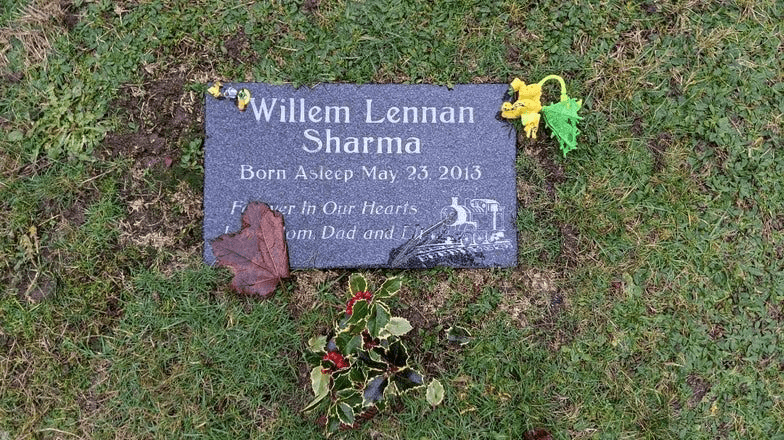
In 1983, the New Chelsea Society and the Department of Veterans Affairs inaugurated a memorial consisting of three granite stelae dedicated to fallen Canadian soldiers. The cemetery contains over 12,000 military graves, with 579 managed by the Commonwealth War Graves Commission. These include 319 servicemen from World War I and 260 from World War II.
World War I graves are concentrated in a designated soldier’s section, while World War II graves are located in the “veterans’ section” and scattered throughout the cemetery. Notable burials include Canadian Air Force pilots and naval personnel.
Modernization
In 2005, Birmingham & Wood Architects began a project to modernize Mountain View Cemetery. This included designing three new buildings: an administrative facility, a landscape care centre, and a memorial service building. Interestingly, the ceremonial hall quickly became one of the city’s most popular venues, hosting various cultural events.
The project also involved two landscape architecture firms, Lees + Associates Landscape Architects and Phillips Farevaag Smallenberg, which brought in experts on heritage preservation, engineering, and other disciplines. The cemetery’s official rededication took place in 2009.
Multiple Burials in a Single Grave
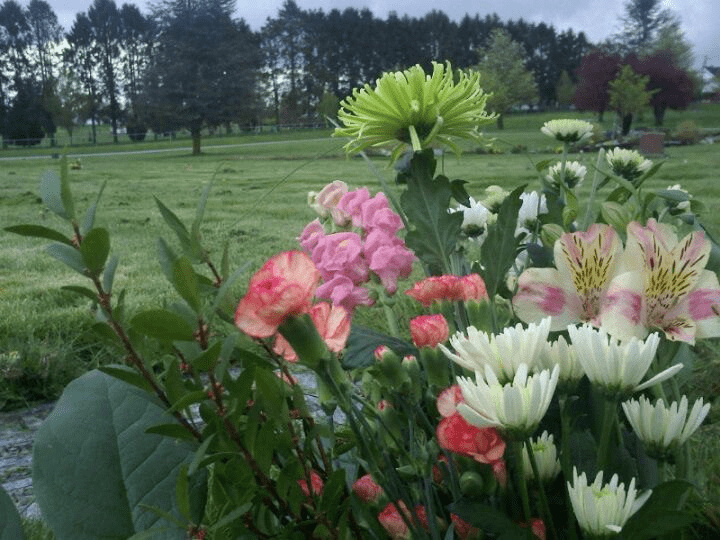
Mountain View Cemetery allows two family members to be buried in a single grave.
On January 1, 2020, the city council expanded this practice to allow unrelated individuals to share graves, though only in newly created plots. This initiative aimed to reduce the environmental impact of burials while offering a cost-saving option, as the cost of a plot is shared among those purchasing it. The remains are interred vertically in environmentally friendly caskets, which decompose over time and contribute to the ecosystem.
The decision reflects Vancouver’s commitment to sustainability, replacing traditional caskets containing harmful materials with biodegradable ones that serve as natural fertilizers.