
The story of Vancouver’s postal service didn’t begin with a grand building, but with a small room in a waterfront hotel. In 1869, the city’s first post office opened there, run by Maximilien Michaud. He handled letters, parcels, and newspapers that arrived by boat from Victoria. From this modest beginning, a vital communication network emerged — one that would grow into Vancouver’s modern postal system.
This article explores how the city’s first post office came to be, who worked there, and how it evolved from a single room into a citywide network. More at vancouver-future.
The First Post Office
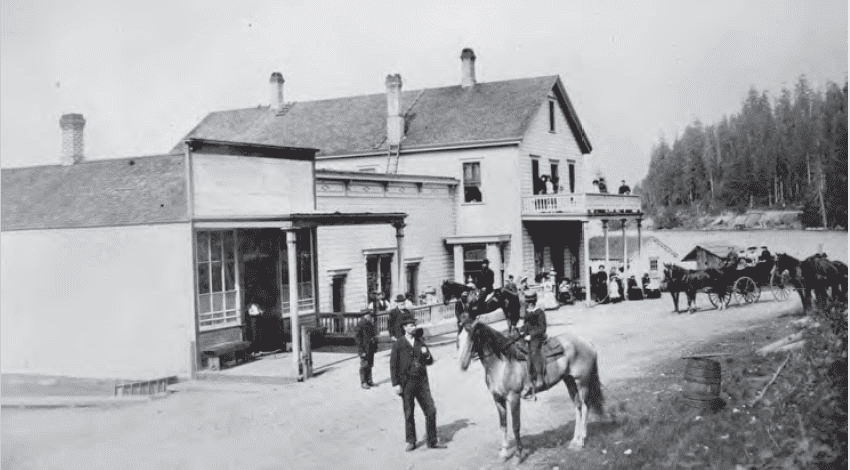
The first post office within today’s Vancouver opened in July 1869. It operated under the name Burrard Inlet Post Office and was located in the kitchen of the Brighton Hotel, near the waterfront close to what is now Gastown. The postmaster, Maximilien Michaud, had just arrived that same year. He accepted and distributed mail, registered parcels, and kept detailed handwritten records.
The setting was simple: a wooden room, a few shelves, an ink bottle, and a sturdy counter. Mail arrived by boat or horse-drawn wagon, most often from Victoria or New Westminster. Residents had to pick up their mail in person — home delivery didn’t yet exist. Michaud worked alone, sorting letters and recording each delivery by hand. Every envelope bore a stamp with the number “28,” the official code for Burrard Inlet in the colonial system.
At the time, the settlement was tiny — just a few dozen buildings, a sawmill, and several small hotels. The post office quickly became a community hub, where locals shared news, awaited mainland newspapers, and learned about events in Victoria. It handled not only personal correspondence but also official mail for companies and the government.
In 1871, when British Columbia joined Canada, postal operations came under federal control. Burrard Inlet Post Office became part of the Canada Post network, which expanded mail volumes and improved routes. This marked the beginning of Vancouver’s permanent city mail service.
Expanding the Network
By the late 19th century, Vancouver’s population was booming. New ports, stores, workshops, and hotels were opening everywhere — and with them came a growing demand for postal services. The original post office could no longer handle the load, prompting the opening of new branches closer to residential areas.
On January 7, 1895, the city introduced home delivery. For the first time, residents received letters at their doorsteps. Letter carriers — instantly recognizable figures — walked through rain and snow, heavy mailbags slung over their shoulders.
In the early 1900s, the network continued to grow. Branches opened near markets, factories, and docks. In 1908, a substation known as SUB 18 was established in Vancouver’s Japanese district, serving a thriving community of merchants and fishermen. It processed thousands of letters and telegrams bound for Japan.
The main post office changed locations several times — first near the waterfront, then beside the railway for faster mail transfers. Later, mail began traveling by ship and, eventually, by air. Delivery times between provinces dropped from weeks to just days. Inside, postal workers sorted hundreds of letters by hand, packed mailbags, and loaded trains late into the night. Over time, carts and the first mechanical sorting tables were introduced to ease the workload.
Architecture, Technology, and Postal Symbols
Vancouver’s first large post office appeared in the late 1800s. Between 1889 and 1892, a two-storey stone building with arches, tall windows, and towers was constructed at Granville and Pender Streets. It stood out among the city’s wooden buildings and marked a new era — one of permanence and progress.
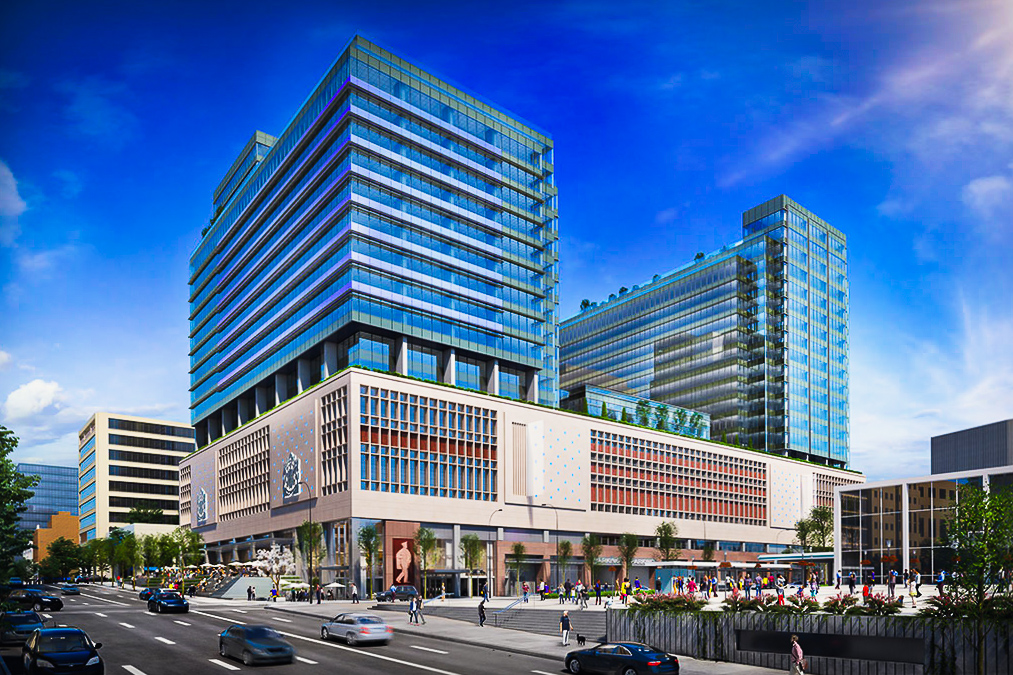
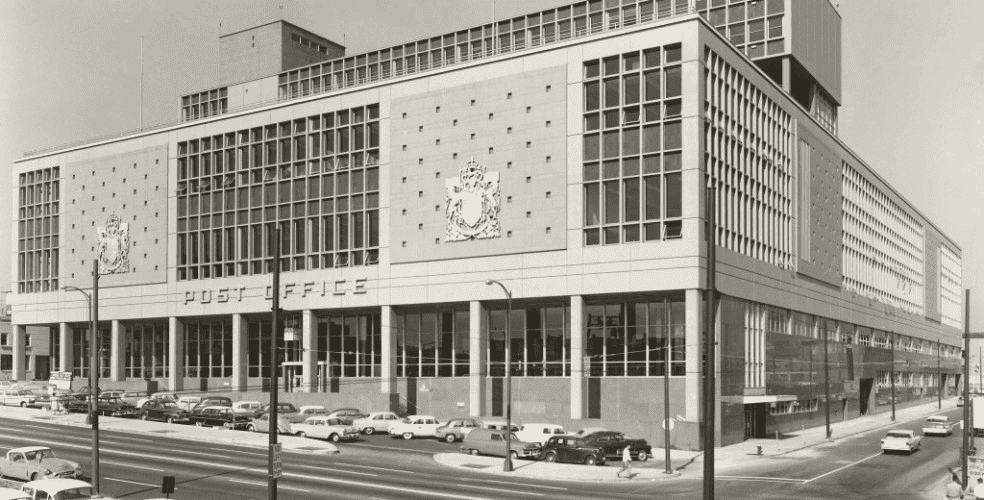
Decades later, the city built an even grander structure. Between 1953 and 1958, the new Main Post Office rose at 349 West Georgia Street. Designed in a modernist style, with glass façades, straight lines, concrete, and steel, it symbolized the optimism of a postwar, high-tech age. Inside, hundreds of employees worked in a building that occupied an entire city block.
Beneath the post office, engineers built a tunnel connecting it directly to the nearby rail station, allowing mailbags to be transported underground straight to the trains. Conveyor belts and moving lines were added — innovations that transformed postal logistics of the era.
On the façade, memorial plaques honoured postal workers who had served during wartime. Nearby stood The Postman sculpture — a bronze figure with a mailbag over his shoulder, a lasting tribute to generations of carriers who brought news, letters, and hope across the city.
Each post office building captured a chapter of Vancouver’s history — a story of growth, dedication, and connection.
New Branches, Adaptation, and Legacy
By the late 19th century, mail service had become an essential part of everyday life. In 1888, street mailboxes were installed across four city streets so residents could drop off letters anytime. Carriers collected the mail several times a day and brought it to the main post office.
In the early 20th century, the service took to the skies. On March 3, 1919, the first international airmail flight departed from Vancouver to Seattle — cutting delivery times dramatically and connecting the West Coast faster than ever.
Throughout the 20th century, more postal stations and sub-offices appeared across neighbourhoods, markets, and industrial zones. Some old locations were merged or relocated to keep pace with urban expansion.
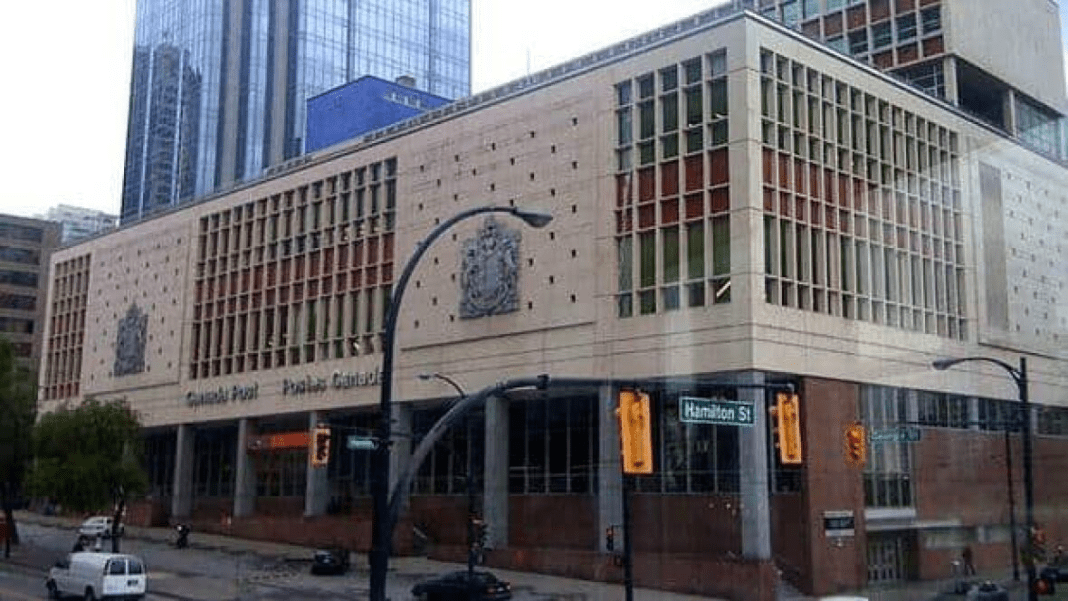
Today, several historic postal buildings remain — most notably the former Main Post Office at 349 West Georgia Street. The site is being preserved through restorations and public exhibits that celebrate the city’s communication heritage. Memorial plaques and sculptures honour generations of postal workers whose dedication kept Vancouver connected.
From a small hotel room by the water to a sprawling urban network, Vancouver’s postal story reflects more than the evolution of mail — it’s a tale of progress, community, and enduring connection.
Sources:
- https://www.vancouverisawesome.com/history/history-of-metro-vancouver-first-post-office-1871-1932330
- https://vancouver.ca/files/cov/349westgeorgia-appendixe.pdf
- https://bnaps.org/hhl/newsletters/bcr/bcr-2004-10-v013n03-w051.pdf
- https://vancouver-historical-society.ca/wp-content/uploads/2023/09/April2008.pdf

