

This Vancouver institution is a museum where it seems that all of civic history “lives,” writes vancouver-future. Exhibits showcasing various historical periods and events are impressively diverse. The museum’s collection is so vast that it cannot be fully displayed in its exhibition halls.
The Museum of Vancouver is one of the city’s oldest cultural institutions. It was founded in 1894 and has undergone numerous changes before being renamed the Museum of Vancouver in 2009.
Learn more about this institution and its history in our article, with references to museumofvancouver.ca.
The Beginning of the Museum’s Story
The museum was founded by the Vancouver Art, Historical, and Scientific Association, established on April 17, 1894, to cultivate an appreciation for beauty among the local population.
Following the association’s first meeting, its first temporary exhibition was opened. This display featured numerous natural history and ethnographic items.
In 1898, the association began regularly acquiring artifacts to create a permanent museum collection.
A Significant Event
In 1905, the long-anticipated opening of the museum took place. It occupied the upper floor of the Carnegie Library.
As time went on, the collection continued to grow, necessitating a new exhibition space. After much discussion with Vancouver’s city council, it was decided that the museum would be relocated to a new Carnegie Library building, officially opening there on April 19, 1905.
Museum Expansion
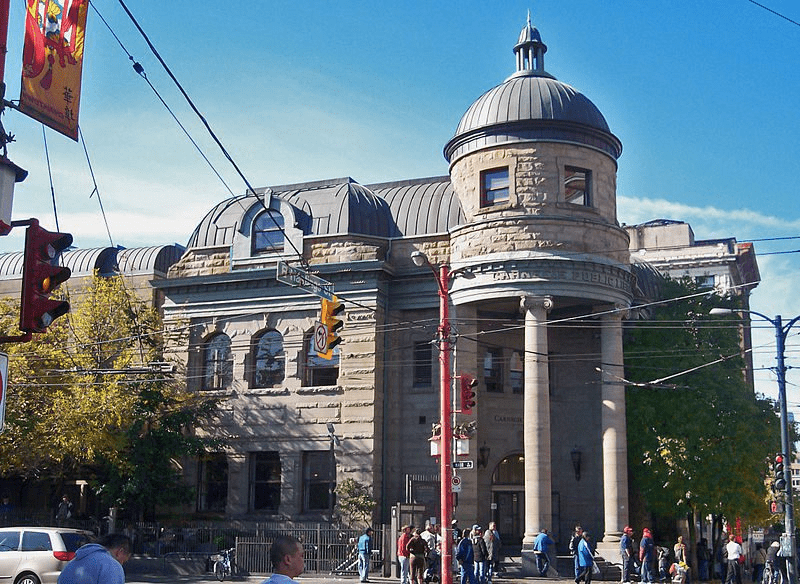
In 1957, the public library relocated, vacating the Carnegie building that had previously been shared with the museum. This provided the museum with a larger space, allowing for a significant expansion of its exhibits.
A New Building
In 1959, the museum came under the control of a dedicated department within Vancouver’s city council.
In 1967, funds were allocated to construct a modern museum building, which opened its doors in 1968.
Renaming the Museum
In 1972, the city council relinquished control of the museum. This led to the creation of a unified association that combined the museum and the planetarium.
In 1977, the museum was officially recognized as a cultural institution.
The year 2009 marked a significant milestone when the museum was renamed the Museum of Vancouver.
“Two in One”
The museum building was constructed in 1967, designed by architect Gerald Hamilton, a representative of the New Formalism architecture school.
Initially, the building was intended to house only the museum. However, thanks to a generous donation from a forestry magnate, the architect was able to incorporate a planetarium into the design.
This addition resulted in a distinctive roof that resembles a woven basket hat.
The official opening ceremony for the building was held on May 20, 1967, attended by Her Majesty.
A Unique Structure
The building is one of Vancouver’s iconic structures and remains highly popular.
When it was first built, it was unofficially dubbed the “Taj Mahal” due to its wide, conical shape. The interior features pools crossed by curved pedestrian bridges, further enhancing its uniqueness.
About the Exhibition
The museum’s collection is extraordinarily vast, and each artifact holds immense value. However, the majority of items must be stored in the museum’s archives due to limited exhibition space. Unfortunately, this means that the entire collection cannot be displayed in the available gallery space.
Nevertheless, this limitation does not prevent the museum staff from regularly updating exhibits by adding new artifacts. These additions include both purchased items and treasures retrieved from the museum’s archives, ensuring that visitors always have something new and intriguing to explore.