

Palaces are extraordinary architectural objects, writes vancouver-future. There is probably no country in the world without at least a few palatial structures. After all, they are true witnesses of the past. Despite the passage of many years, they continue to evoke interest and admiration.
Canada is no exception. The country is also home to palaces that amaze with their diversity.
Some are restrained yet incredibly luxurious, austere yet leisurely, nestled in forests or mountainous areas. This is the essence of Canada’s palatial spectrum.
Vancouver is one of the Canadian cities whose architecture truly impresses. Its richness and variety will not leave even the most seasoned tourist indifferent.
In this article, based on sources such as plus.google.com, intertrud.net, and gothicrock, we will talk about one of Vancouver’s palaces that ranks among the most famous: Hatley Castle.
Preface
The history of this magnificent castle is incredibly intriguing. It is open for tours year-round, offering visitors a nostalgic journey back to the distant Victorian era—a time when coal barons and railway magnates built grand mansions.
In 1850, Scottish immigrant Robert Dunsmuir decided to leave Scotland and move to Canada. He aimed to develop coal mines in Vancouver.
According to legend, Robert made an intriguing promise to his wife: if she agreed to move with him to Vancouver, he would definitely build her a palace.
An Alternate Version
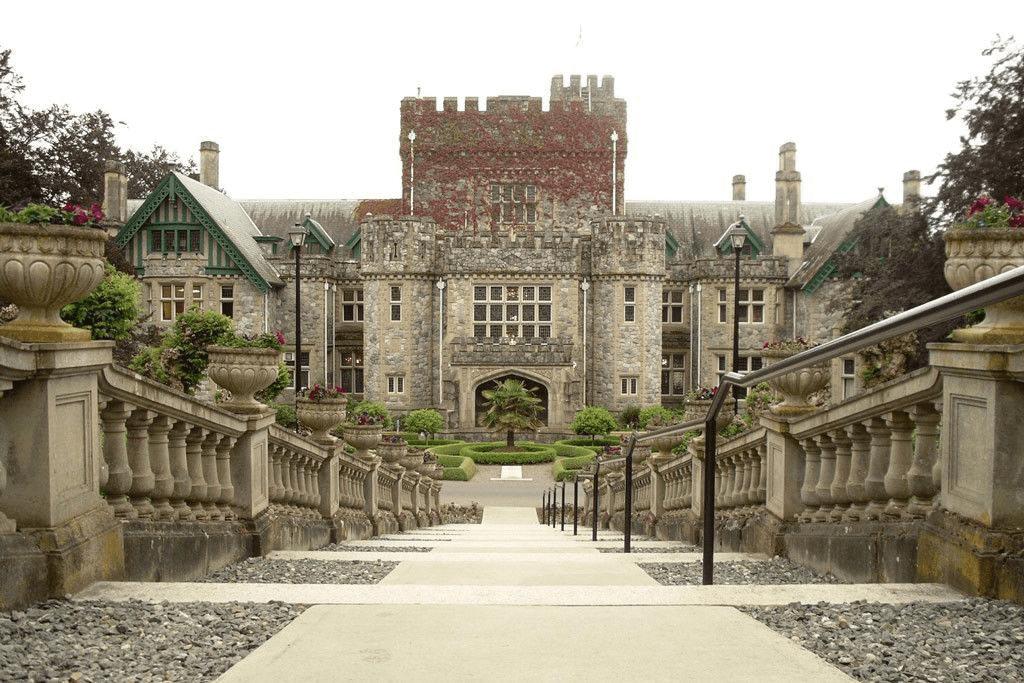
Another perspective suggests that the real reason for constructing the palace was simple competition. Robert allegedly dreamed of keeping up with other magnates who were also keen on building architectural marvels for themselves and their families.
In 1888, Robert Dunsmuir purchased a 28-hectare plot of land near the prestigious Rockland district, with scenic views of the surrounding countryside.
Extensive Work
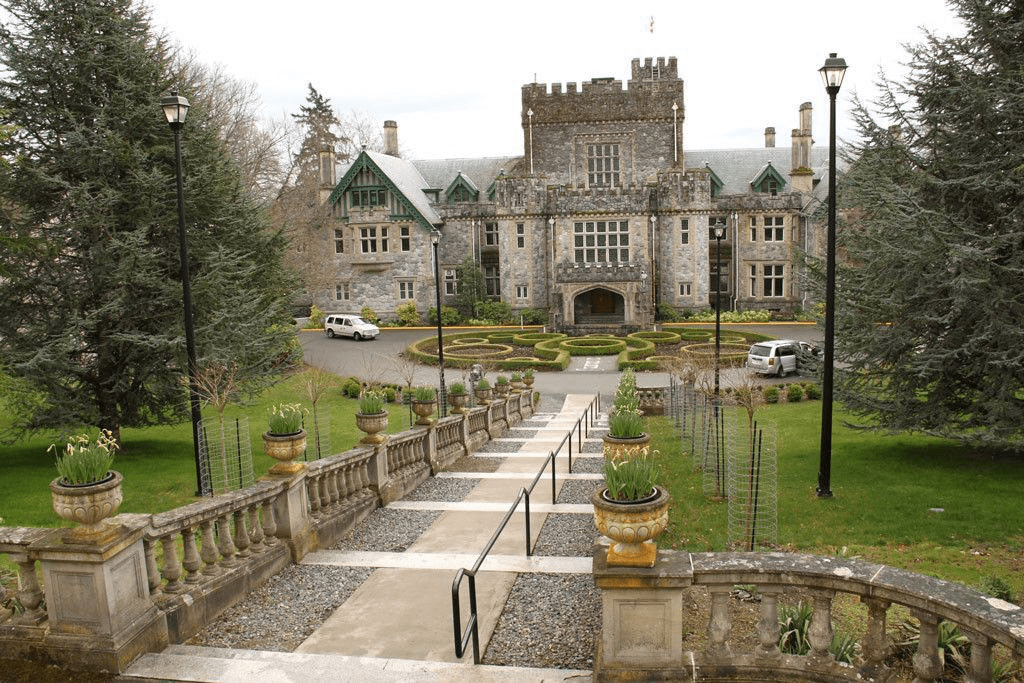
The next four years were dedicated to shaping the palace. Railway cars from Chicago transported exquisite hardwood finishes designed to adorn the main corridor and a 57-meter staircase. This “wooden interior” was valued at $30,000.
Architectural Highlights
The estate featured an impressive number of skillfully designed rooms. At that time, such design was considered exceptional. Robert also built a large library, with bookshelves so vast they could hold over a thousand leather-bound volumes.
The pride of the castle was its grand hall, a 50-foot-long space adorned with enchanting stained glass windows, two massive brass chandeliers powered by electricity and gas, and two fireplaces decorated with gilding and bird-themed artwork. Large mirrors with vibrant garlands and elegant bouquets left an unforgettable impression.
The mansion also included a ballroom, billiard room, smoking room, a sophisticated dining room, and a kitchen. The total cost of construction by 1891 reached $500,000.
Legal Disputes
In April 1889, Robert Dunsmuir unexpectedly passed away, just a year before the completion of the palace. His wife inherited all his wealth. However, when she passed away in 1908, the palace was transferred to their daughters.
Before her death, Robert’s wife became embroiled in a legal dispute, losing ownership of several coal mines. Meanwhile, their son was entirely deprived of his inheritance.
Later, the sisters divided the land into equal plots, selling them at prices far below their true value.
The palace remained unoccupied for some time until it was purchased by the federal government. It was planned to be used as a military hospital for treating people with general illnesses, tuberculosis, insanity, and paralysis.
Reconstruction
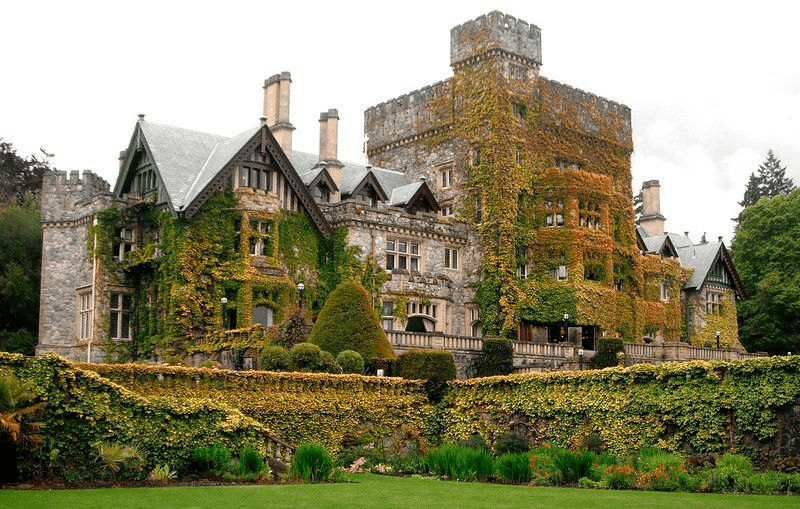
Over time, the palace underwent reconstruction. Walls were demolished, fire escapes and a kitchen elevator were added to the exterior, and steam heating was installed.
The only room that remained untouched and preserved in its original state was the ballroom, where weekly dances were once held.
In 1921, the military hospital was closed after the Canadian government introduced a new policy, allowing surviving veterans to reside in other institutions.
New Status
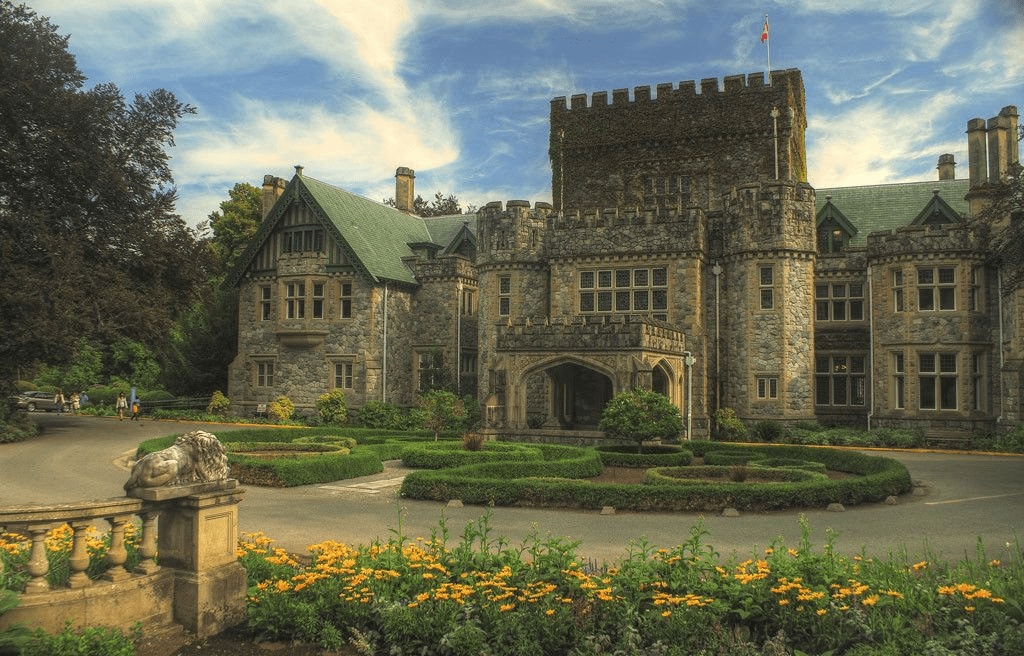
The building, once created by Dunsmuir, soon became a college residence, housing 160 students. Gradually, the number of students increased to 600. In 1946, the School Board moved into the building, occupying it for the next 20 years.
In the late 1950s, the palace was awarded the honorary title of “National Heritage Site.” James Nesbitt was appointed head of the Society for the Preservation of the Castle. During the 1980s, visitor donations allowed the castle to regain its original Victorian splendor.
Back to Robert Dunsmuir
Returning to Robert Dunsmuir, let’s examine how he became one of the coal barons.
After arriving in Vancouver in 1850, he struggled to find work. At the time, he was already the father of two sons, Alexander and James. Robert began studying the geology of the Vancouver area, soon discovering carbon deposits in the suburbs. This sparked his interest in coal mining, a venture that proved incredibly successful. He discovered a large coal deposit, which became the foundation of his business.
As mentioned earlier, Robert’s wife was reluctant to move with him, requiring significant persuasion. He eventually promised her a palace as an incentive.
All of Dunsmuir’s hopes were realized, and he became immensely wealthy in Vancouver. His promise of a palace was also fulfilled.
The castle’s interior, including oak panels, was crafted by A.N. Andrew’s Co. The oak trees were grown on company-owned land specifically for timber production.
Each component—such as staircases, doors, window frames, and panels – was transported by railway cars. Other woods used in the construction included Spanish mahogany, western red cedar, cherry, Hawaiian koa, hazel, eucalyptus, rosewood, maple, and holly. These materials were used for furnishing the living rooms, library, bedrooms, and window frames.
Later, Robert decided to invest in Canadian railroads, earning him the status of a railway magnate. This brought him even greater success and new opportunities, but that is a story for another time—one deserving of its own book.