

Schools are perhaps the most common institutions in any city, writes vancouver-future. Their purpose is to ensure that children in all city districts have access to education.
However, this approach is typical of Slavic countries, particularly Ukraine. In these countries, schools are abundant and are usually divided into primary and secondary institutions, as well as public and private schools.
In foreign countries, the categorization of schools is somewhat different, and the overall approach to school education abroad contrasts significantly with what we are used to.
Vancouver exemplifies the foreign school system. For instance, there are schools dedicated solely to senior (not even middle) grades. Another common practice is separate education for boys and girls, allowing schools to focus on subjects most relevant to each gender. For example, boys often study technical sciences, while girls focus more on humanities.
In this article, based on sources such as archives.west vancouver.ca, we delve into one of Vancouver’s most renowned schools. Additionally, you’ll learn about the history of this institution, a topic deserving special attention due to its truly fascinating and rich past.
Instead of a Prologue
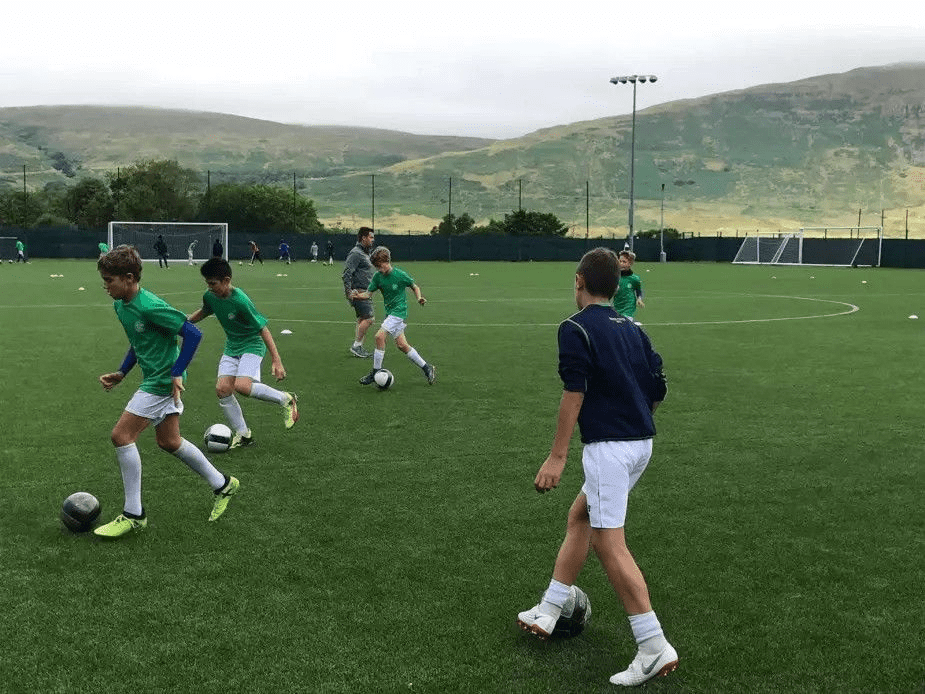
Located in West Vancouver is an educational institution represented by a secondary school where students from grades 8 to 12 study.
This school is one of three public secondary schools in West Vancouver.
The school features both North and South campuses, each equipped with a gymnasium and a cafeteria.
Additionally, the institution boasts a football field and a basketball court. It also has a running track for athletics or warm-ups before sports classes.
The Beginning of the Story
West Vancouver Secondary School was founded in 1927.
Initially, the building was intended to house a storefront selling various items. These primarily included purple, black, and yellow clothing purchased by Vancouver’s less affluent residents.
However, a tragic accident caused the storefront to burn down completely.
This event led to the creation of the school.
Completion of Construction
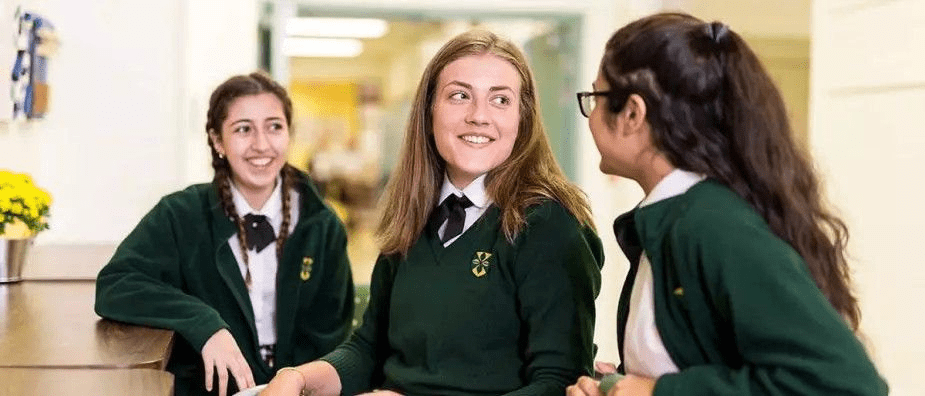
When construction was completed, the school held its long-awaited opening. The building featured eight classrooms and a separate gymnasium.
In subsequent years, additional classrooms and a library were added to the structure. Moreover, the school’s administration organized a space in the eastern part of the building where students could learn basic housekeeping skills.
Expansion of the Premises
In 1951, construction began on a new building belonging to the North Campus, which was converted into a secondary school by 1952.
Later, in 1955, the building was expanded with the addition of a three-storey west wing. In 1960, a second gymnasium was built.
Thanks to these expansions, the school gained its own 500-seat theatre along with two music rooms located in the east wing of the building.
Subsequently, local funding facilitated the addition of six more rooms near the North Campus. A new structure for the South Campus was also built to accommodate the growing number of students due to the municipality’s expansion.
Demolition of the Historic Building
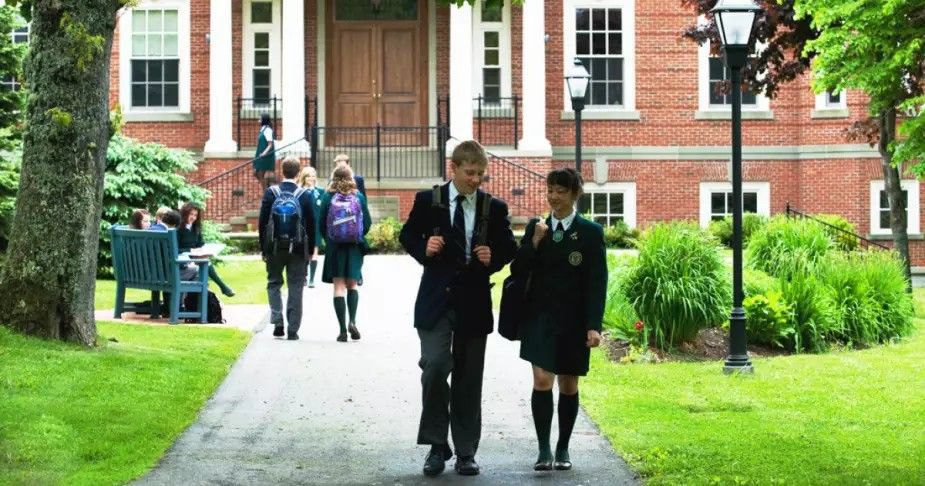
The school’s original building was used for many years as a junior secondary school until all classes were eventually relocated to another facility.
In the late 1980s, the vacated structure was allocated to the Jewish Community Centre. By 1995, it was demolished entirely.
Reconstruction
In the mid-1990s, a major renovation took place at the school, including reconstruction of the North Campus, both its exterior and interior.
During this time, classes were temporarily shifted to distance learning until the extensive renovation was completed in the 2000s.
The changes included:
- Adding a third gymnasium.
- Relocating the library and administrative office.
- Creating a new cafeteria, modernized classrooms, and corridors, as well as a new west wing.
The renovations were completed in 2005, coinciding with the opening of the school’s new east wing and the Kay Meek Centre auditorium.
The Emergence of a Centre
In 2004, the Arts Centre was established on the site of the old school theatre. The project cost $12 million.
The Centre features a main theatre with 490 seats and a versatile studio theatre with 216 seats, the latter being fully operational by 2006.
The first production staged at the Centre’s theatre was notably brief.
The Centre frequently hosts performances by the Vancouver Recital Society, Early Music Vancouver, and The Arts Club Theatre Company, as well as events by local community organizations.
Specialized Courses
This Vancouver school is a member of the International Baccalaureate (IB) program.
It offers various courses in biology, chemistry, English, French, geography, history, Japanese, mathematics, physics, Spanish, theatre, and visual arts.
It is noteworthy that this secondary school is the only public institution in West Vancouver offering the IB program.
A Variety of Sports Activities
Students at West Vancouver Secondary School can participate in 42 different sports.
For boys, activities include:
- Football,
- Rugby,
- Basketball,
- Badminton,
- Track and field,
- Snowboarding.
For girls, activities include:
- Volleyball,
- Hockey,
- Basketball,
- Badminton,
- Football,
- Track and field.
Conclusion
West Vancouver Secondary School is an educational institution with an incredibly rich history. It exemplifies how a learning facility can continuously evolve and improve. In addition to its expansive premises and numerous structural divisions, the school offers other advantages. Chief among them is the opportunity for students to realize their potential in various fields, including arts and sports, promoting comprehensive development.
Despite its modern approach to education, the school carefully preserves its history and traditions, as it is one of the older institutions in the area. This historical legacy serves as a hallmark of the school.
A combination of respect for history and innovative teaching methods produces excellent results. As a result, students attend the school with great enthusiasm, gaining substantial knowledge across disciplines. This is undoubtedly the primary achievement of any educational institution, its teachers, and its students.