

The mountainous terrain of British Columbia presented numerous challenges for aviation, writes vancouver-future. For the first two decades of the 20th century, airplanes were unable to fly over the rugged mountain ranges, resulting in the absence of regular flights until the 1930s.
In this article, referencing canadianflight.org, we delve into the evolution of aviation in British Columbia.
The Debut
On March 25, 1910, a small Curtiss biplane made its first flight in British Columbia.
The event attracted a large crowd to Miura Park, as Vancouver residents gathered to witness this groundbreaking moment.
The First Aircraft Designer
British Columbia was home to one of Canada’s aviation pioneers, William Gibson. Despite lacking formal education, Gibson designed Canada’s first aviation engine.
This milestone sparked the construction of more advanced aircraft in the province. On September 8, 1910, an airplane powered by Gibson’s engine successfully completed its maiden flight.
Another Aircraft
Gibson later developed a second aircraft, the “Multiplane,” which featured aerodynamic profiles resembling louvered blinds.
Using the same powerful engine, Gibson aimed to prove the effectiveness of this new surface design. The plane successfully flew several times in 1911.
A Promising Start and a Tragic End
Other aviation pioneers in British Columbia included William MacMullen and brothers Bill and Winston Templeton. They built a tractor-type biplane with parts sourced from the United States.
The plane made successful flights in 1911, but a fire later destroyed it. Lacking funds for reconstruction, the team had to abandon their project.
A Career Shift
The allure of speed and danger attracted Vancouver auto racer Billy Stark to aviation.
In 1911, with no aviation schools in Canada, Stark enrolled in an American aviation school led by Glenn Curtiss, a prominent aviator and aircraft designer. Stark received training in piloting, aircraft maintenance, and engine repair—skills essential for safe and efficient flight.
The First Passengers
After earning his pilot’s license, Stark began flying a new Curtiss Flyer in British Columbia.
On April 24, 1912, sports editor Jim Hewitt became the province’s first airplane passenger. Stark’s wife also experienced flight shortly thereafter.
About the Aircraft
The Curtiss Flyer was a typical early military-era aircraft, constructed with bamboo, wire, and alloyed fabric. It featured a six-cylinder water-cooled engine with a gravity-fed fuel tank.
Control over altitude and direction was managed with a single joystick, while the plane’s structural integrity relied on tightly stretched wires.
Due to their lightweight construction, such aircraft were prone to accidents.
The First Crash
In 1913, pilots John and Alice Bryant arrived in British Columbia. On August 6, John modified his plane with a float undercarriage to counter gusty winds.
Tragically, during a flight, one of the wings detached, and the plane crashed into a building. John Bryant died instantly, marking Canada’s first aviation fatality.
Military Applications
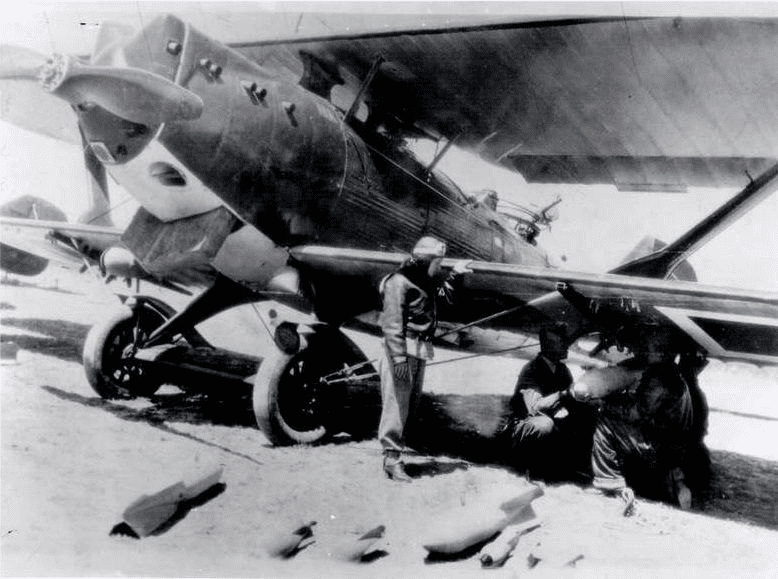
The outbreak of World War I in 1914 saw the adaptation of airplanes for military purposes, particularly reconnaissance. The Royal Flying Corps, established in 1912, played a critical role.
In September 1915, the British Columbia Aero Club began training pilots under Stark’s guidance, using a Curtiss aircraft. However, training was interrupted when the sole aircraft was damaged.
In 1915, the British Columbia Aviation School was established to formalize pilot training.
Significant Improvements
By the end of World War I, aircraft had undergone significant advancements. They were no longer fragile and slow, featuring more powerful engines and durable designs.
Cockpits were equipped with windshields, and pilots received a comprehensive array of instruments for monitoring flight operations.
A New Organization
Following the war, the Canadian Air League was established to promote aviation through airshows.
On June 11, 1919, the league organized an “Air Meet” featuring group flights and aerial combat demonstrations using Curtiss JN-4 trainers.
Mail Delivery
In March 1919, William Boeing and Eddie Hubbard completed the first international air mail delivery, marking a milestone in aviation history.
The Air League also organized local flights between communities in British Columbia.
Captain Ernest Hoy achieved a remarkable feat in 1919 by flying from Vancouver to Calgary, overcoming the challenges posed by mountainous terrain.
Toward Commercial Aviation
The difficulties of flying over British Columbia’s rugged landscape and vast distances underscored the need for commercial aviation.
On October 15, 1920, the first regular international air mail route was established using a Boeing 4C floatplane.
However, frequent crashes curtailed early commercial ventures. Companies like Pacific Aviation and local aviation schools ceased operations after a rise in aviation accidents.
Despite these setbacks, British Columbia’s aviation history laid the groundwork for future innovations, cementing its place in Canada’s aviation legacy.
A New Organization
The Canadian Air League was established immediately after the end of World War I, with the primary goal of advancing aviation. Airshows were identified as the most effective way to promote this objective.
On June 11, 1919, the league organized an “Air Meet,” featuring numerous group flights and aerial combat demonstrations. Curtiss JN-4 trainers were widely used during this event.
Mail Delivery
The year 1919 also saw significant aviation milestones in British Columbia, many of which revolved around mail transportation.
In March, William Boeing and Eddie Hubbard made history by delivering the first international airmail.
In addition to mail services, the Air League organized flights between towns within the province.
Captain Ernest Hoy completed a daring flight to Calgary in 1919, overcoming the immense challenges of navigating mountainous terrain. His accomplishment was widely celebrated as a remarkable feat of aviation.
British Columbia’s rugged landscape and vast distances presented unique challenges to early aviators. These factors underscored the potential for commercial aviation to address such logistical difficulties.
The Emergence of Commercial Aviation
The ability to transport mail over long distances laid the groundwork for commercial aviation.
On October 15, 1920, the first regular international airmail route was launched using a Boeing 4C floatplane. At the time, this aircraft was well-suited for airmail delivery.
However, attempts to expand commercial aviation were short-lived, largely due to frequent crashes.
For instance, Vancouver-based Pacific Aviation and local aviation schools, which relied heavily on Curtiss JN-4 trainers, ceased operations as aviation accidents became more common.
Despite these setbacks, the pioneering efforts of aviators in British Columbia played a crucial role in shaping the future of both mail delivery and commercial aviation in Canada.