

The healthcare sector is one of the most critical aspects for any state and city. As noted by vancouver-future, the value of medical institutions is extraordinary. Generally, the older the hospital, the more experienced its staff, as “treatment secrets” are passed down from generation to generation. Furthermore, if a particular medical institution has developed its own concept for treating specific illnesses, it becomes the hallmark of the entire hospital.
In this article, based on sources including arthritis.ca, oipc.bc.ca, cbc.ca, and vch.ca, we discuss a Vancouver medical institution renowned for its unique treatment approaches. Additionally, the hospital conducts extensive scientific research, significantly advancing medical science. This is achieved thanks to its diverse departments and structural subdivisions, each with its own specialization. This variety greatly enhances the hospital’s capabilities, which is a key factor for patients. In practice, the hospital’s annual patient traffic is record-breaking, as people seek help for various medical issues and receive highly qualified, effective care.
Brief Overview

The institution discussed in this article can be divided into two parts: the hospital and the medical sciences centre.
More specifically, this medical institution provides emergency care and operates under the auspices of the university. This Vancouver hospital is one of the largest in Canada, admitting 116,000 patients annually. The facility comprises 1,900 rooms.
Its staff includes 9,500 medical professionals, alongside 1,000 volunteers who play a vital role in its operations.
As of 2005, the hospital’s annual budget was $463 million.
Foundation of the Institution
The history of this Vancouver hospital dates back to 1993 when the Vancouver General Hospital merged with UBC Hospital. In 1995, the GF Strong Rehabilitation Centre and the George Pearson Centre also joined the institution.
In spring 1997, the facility further expanded, integrating with the BC Rehab Society, the BC & Yukon Division, and the clinical department of the Arthritis Society.
A New Owner
In 2001, the Vancouver Coastal Health Authority assumed ownership and management of the Vancouver hospital and its affiliated facilities.
About the Structure
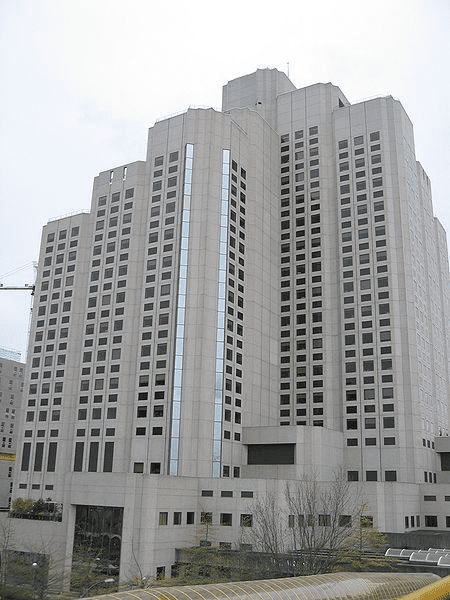
This medical institution is notably expansive, consisting of primary care, specialized care, teaching, and research hospitals. It is closely affiliated with the University’s Faculty of Medicine.
Its components include the Vancouver General Hospital and UBC Hospital.
Interestingly, despite its comprehensive range of services, the hospital does not include obstetrics or pediatrics. These specialties are handled by the Women’s Health Centre and the Children’s Hospital, located nearby.
Details on Its Components
Vancouver General Hospital is one of the largest hospitals in Canada.
UBC Hospital was established in 1968 through donations.
Its structure includes:
- An emergency care department
- A surgical observation unit
- An extended care unit
- A temporary care unit
- A psychiatric department
The UBC Hospital specializes in emergency medicine, general surgery, reconstructive orthopedic surgery, psychiatry, and gerontology.
The hospital features eight operating rooms and employs 800 staff, including 270 doctors and 450 nurses.
Centers, Programs, and Clinics
Additionally, the hospital offers access to specialized clinics, centers, and programs, all part of its structure:
- A Bladder Treatment Centre
- A Movement Disorders Clinic
- A Sleep Disorders Program
- A Multiple Sclerosis Clinic
- A Cognitive Disorders Clinic
- A Breast Reconstruction Program
- A Mental Health Centre
Surgical Procedures
The hospital’s Centre for Surgical Innovation was established in 2006. It features two operating rooms and 38 inpatient beds.
Approximately 1,500 surgeries are performed annually, including hip and knee replacements.
Treatment of Numerous Conditions
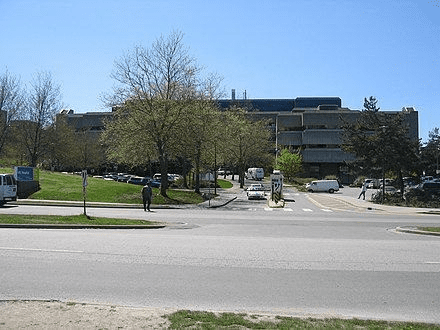
The Emergency Care Centre provides treatment for a wide range of conditions, including:
- Allergies
- Asthma
- Fractures
- Cuts requiring stitches
- Eye issues
- Fever
- Flu
- Minor burns
- Bleeding
- Skin infections
- Sprains
The Centre also offers diagnostic services such as tests, X-rays, blood analysis, and ultrasounds.
No appointments are necessary for admission. Annually, the Centre treats about 17,000 patients.
Brain Research
The Brain Research Centre was established in collaboration with the university’s Faculty of Medicine and the Vancouver Research Institute.
Its team includes 200 researchers with multidisciplinary expertise in neuroscience. They conduct essential studies to diagnose and treat brain-related illnesses and develop new methods and approaches to treatment.
Rehabilitation Centre

The GF Strong Rehabilitation Centre was part of the Vancouver hospital system from 1995 to 2001. It is Canada’s largest rehabilitation facility, specializing in acquired brain injuries, spinal cord injuries, arthritis, and neuromusculoskeletal conditions. The Centre also organizes specialized youth programs.
Founded in 1949, the Centre is named after Dr. George Frederick Strong. Its staff includes 800 employees.
A “Home” for Individuals with Disabilities
The George Pearson Centre was part of the Vancouver hospital system from 1995 to 2001.
This facility serves as a residence for 120 individuals with severe disabilities, providing necessary care, treatment, and balanced nutrition. All procedures are conducted with the consent of patients’ families.
Founded in 1952, the Centre was initially established to provide long-term care for tuberculosis patients.
In 1938, an auxiliary women’s unit was created, which later became part of the George Pearson Centre in 1965.
This comprehensive history demonstrates the vital role Vancouver General Hospital plays in Canada’s healthcare system. Its expansive structure and focus on research and innovation make it a cornerstone of medical advancement.