

In every major city worldwide, a metro system is essential. In this article, you’ll discover the origins and development of Vancouver’s rapid transit system, renowned for its unique technologies. Learn more at vancouver-future.
The History of the Metro
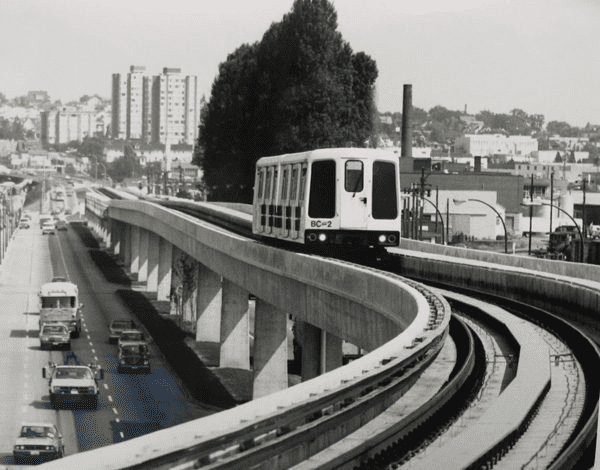
The history of Vancouver’s metro system dates back to the 1950s. Modernist architect Uël Cots proposed building a monorail system, but the project was never realized.
By the 1970s, rising traffic congestion highlighted the need for a rapid transit system. However, financial constraints delayed its creation. During this time, the Urban Transportation Development Corporation introduced a groundbreaking technology known as the Intermediate Capacity Transit System (ICTS), an automated metro system operated without drivers.
A decade later, the demand for rapid transit grew exponentially. To showcase its capabilities at EXPO 86, a demonstration line was constructed in Vancouver.
SkyTrain: A Modern Rapid Transit System
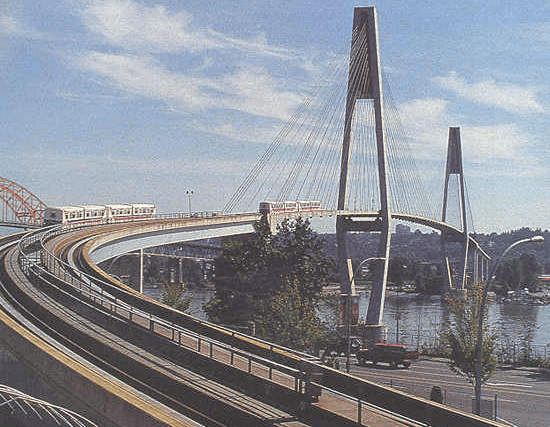
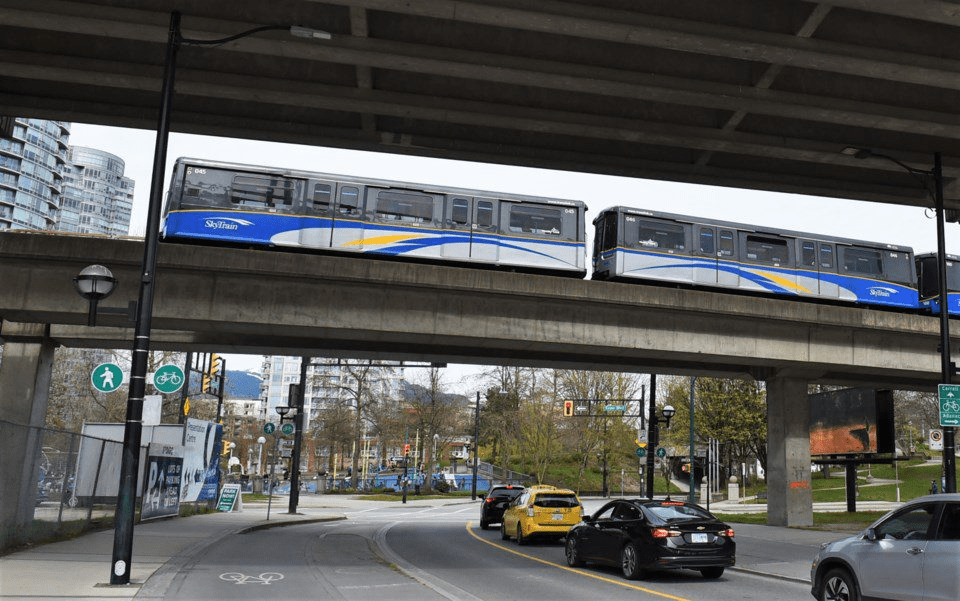
SkyTrain is Vancouver’s rapid transit system, featuring fully automated routes that operate both above ground on elevated tracks and underground.
In 1985, the first official SkyTrain line was inaugurated. It ran through the Dunsmuir Tunnel under the downtown area, connecting Waterfront Station to New Westminster Station. Four years later, the line was extended to Columbia Station, and by 1994, its terminus was moved to King George Station, creating a route nearly 29 kilometers long with over 20 stations.
In 2002, the second line, known as the Millennium Line, opened, spanning 25.5 kilometers.
By 2009, the Canada Line was operational, branching into two segments, each with 13 stations. One line connects to Richmond-Brighouse, while the other leads to the airport.
In 2016, train operations were reorganized across the first two lines. The Expo Line branched into two routes: one continued as the Expo Line, while the other diverted to Production Way – University. The Millennium Line was restructured to run between VCC-Clark and Lafarge Lake – Douglas.
Technology, Accessibility, and Rolling Stock
SkyTrain’s automated train control technology was initially developed by Alcatel. Commands from a central computer are transmitted to onboard train computers through an inductive cable laid along the tracks. This cable communicates radio signals, tuned to equipment-specific frequencies, enabling reliable communication even in areas where traditional antennas are ineffective. SkyTrain signaling systems are now deployed worldwide, boasting exceptional reliability, with over 95% of trains running on schedule. Passenger interference with train doors remains the primary cause of delays.
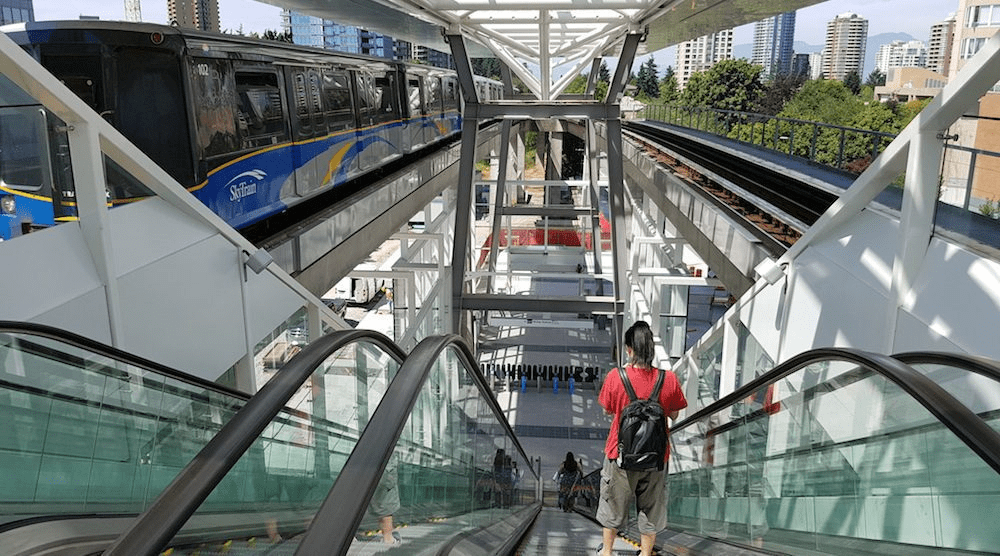
The SkyTrain network is fully accessible. Cars are equipped with designated spaces for wheelchairs, all stations have elevators, and platform edges are marked with brightly colored tiles to assist visually impaired passengers.
SkyTrain trains operate in configurations of two, four, or six cars. The latest generation features a sleek, streamlined design with large windows and open gangways, allowing passengers to move throughout the train. Enhanced interior layouts provide more space for bicycles and wheelchairs, while improved insulation reduces noise and maintains a comfortable cabin temperature.
The British Columbia government is planning the expansion of SkyTrain’s infrastructure to accommodate increasing passenger demand. Projects include extending existing lines, increasing capacity, purchasing new train cars, and operating longer trains. Plans also aim to reduce peak-time intervals to 75 seconds, ensuring even greater efficiency for Vancouver’s rapidly growing metro system.